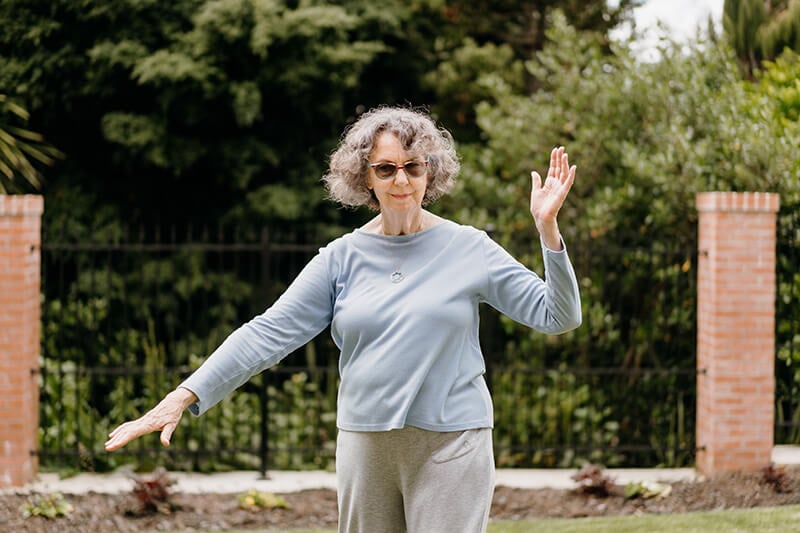

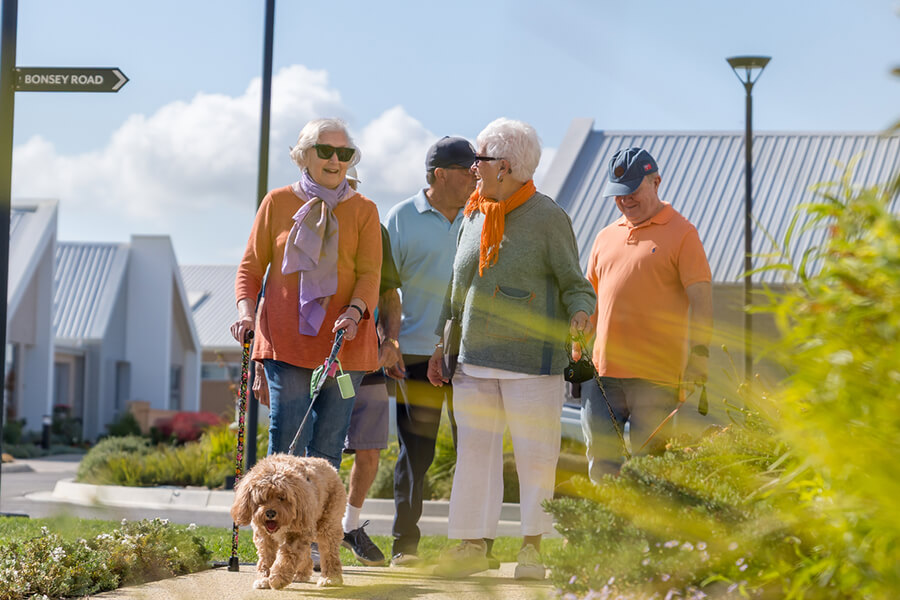
| As people age, their likelihood of experiencing a fall increases, so good balance is an important factor in preventing falls later in life. Balance training involves gentle, low-impact movements that build strength through the legs, hips, and core. Consistent practice helps preserve mobility and the ability to safely manage everyday movements such as walking, navigating stairs, and rising from a seated position. |
Why balance exercises for seniors matter
Do you notice you need to concentrate a little harder these days to step off the footpath, reach up to a high shelf, or walk on uneven ground? If so, you might feel less confident getting out and about than you once did. Staying steady on your feet is key to maintaining independence, confidence, and everyday ease.
Balance exercises for seniors are a simple, effective way to support mobility and reduce the risk of falls, the leading cause of injury for older adults in New Zealand. In this guide, we’ll walk you through why balance matters, what changes as we age, and practical exercises to improve balance safely at home.
Disclaimer: This information is general in nature and does not replace medical advice. If you have concerns about your balance or a medical condition that may affect your stability, speak with your doctor before starting a new exercise programme.
The benefits of balance exercises for elderly people
Good balance sits at the centre of everyday independence. It's what lets you walk to the letterbox, get in and out of the car, work in the garden, or carry the shopping without a second thought. When balance starts to decline, tasks that once felt effortless can start to feel unsteady.
Reduced balance also raises the risk of falls, which can affect mobility, confidence, and increase the chance of injuries.
- Improve coordination and stability for daily tasks
- Strengthen key muscle groups so you stay mobile for longer
- Support safer movement inside and outside your home, opening up more activity options
- Build your confidence for everyday tasks, lifting your overall quality of life
- Prevent falls, reducing the risk of fractures
Whether you're living in your family home or in a retirement village, small daily habits that support balance and keep you active in later life go a long way toward helping you stay independent as you age.
What causes balance decline as we age?
If you've noticed your balance isn't what it used to be, a few common factors could be at play, such as:
- Loss of muscle strength, especially through your legs and core
- Stiffer joints limiting your range of motion
- Changes in vision affecting your spatial awareness
- Slower reflexes making it harder to react quickly
- Inner ear or vestibular changes
- Medication side effects
These changes raise the risk of trips and falls, which in turn can knock your confidence about moving around. The encouraging news is that some of these factors can be improved through regular, targeted exercise.
Related articles
Breathing exercises for seniors
Resistance band exercises for seniors
Fun activities for seniors in assisted living
Safety tips when doing balance exercises
Safety comes first, regardless of whatever exercise routine you start. Go at a pace that suits you and pay attention to what your body is telling you. A few general guidelines:
- Use a sturdy chair, bench or wall for support
- Wear comfortable, non-slip shoes (never socks alone)
-
Start gently and build up over time
-
Stop if you feel dizzy, unsteady or in any pain
-
Speak to your GP or physiotherapist if you have any concerns
Taking a safe, considered approach will make your balance exercises more effective and enjoyable.
Exercises to improve balance: where seniors should safely start
If you're new to balance exercises, start with simple movements and focus on consistency rather than intensity.
- Aim for 10–15 minutes a day
- Choose exercises suited to your current ability
- Use support where needed
- Build up gradually over time
At home
You don't need a gym membership or fancy equipment. Most balance exercises can be done at home with little to no equipment, making them easy to fit into your daily routine.
Exercise classes
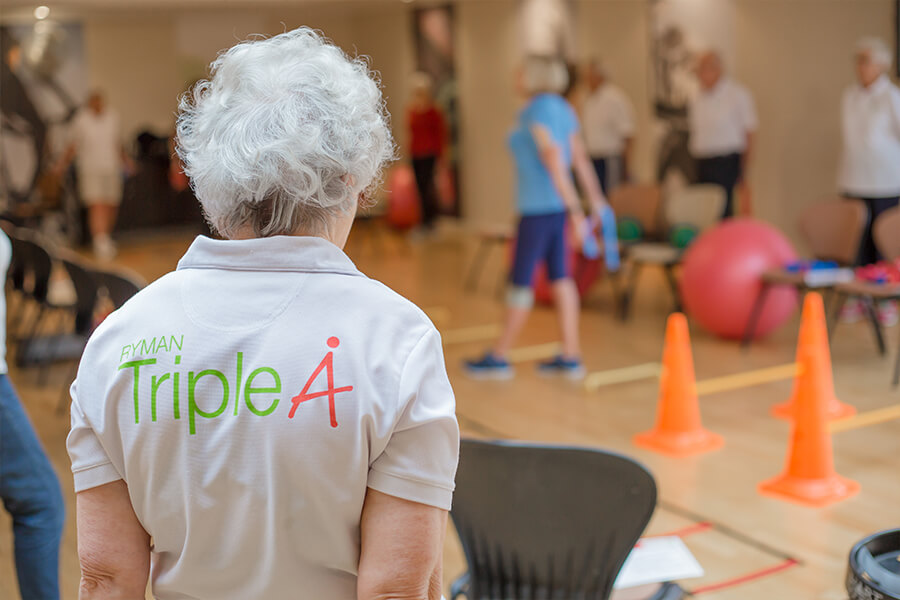
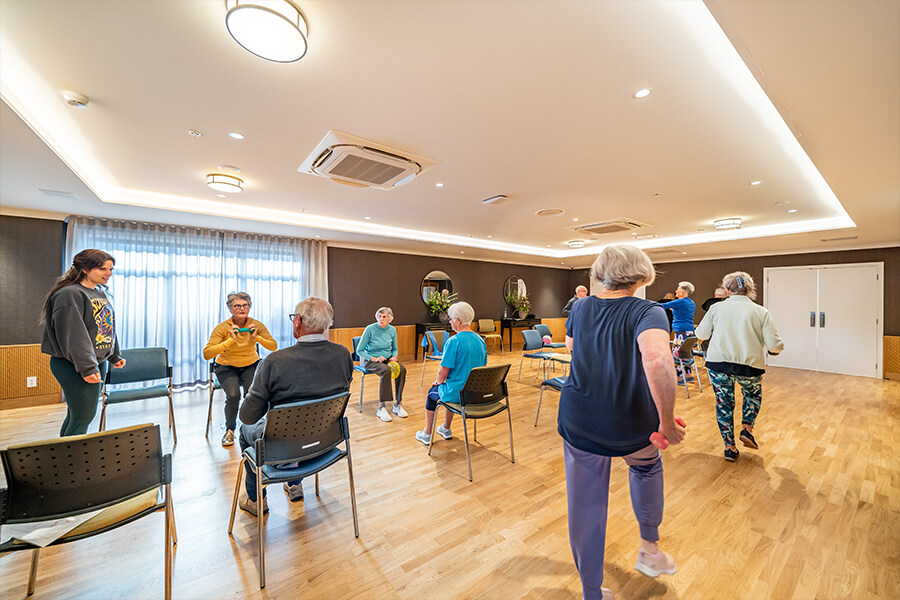
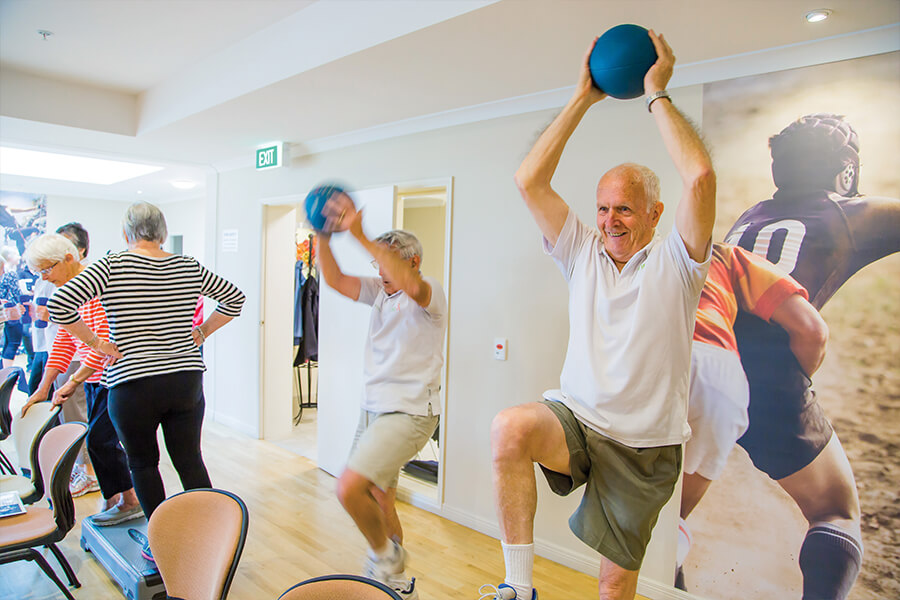
If you enjoy exercising with others and live in a Ryman village, balance work is built into many of our complimentary ACC-accredited Triple A exercise classes. Build strength and balance while catching up with your neighbours, then head to the café together afterwards.
Simple balance exercises for the elderly to try at home
These beginner-friendly balance exercises can help build strength and stability, and are a solid starting point before progressing to more dynamic balance work.
Single-leg stand (with support)
- Stand behind a chair, holding the back for support
- Lift one foot slightly off the floor
- Hold for 5–10 seconds, then swap sides
- Tip – keep your posture tall and steady
Sit-to-stand
- Sit in a sturdy chair
- Stand up without using your hands, if you can
- Slowly lower yourself back down
- Tip – use armrests if you need to
Side leg raises
- Hold onto a chair
- Raise one leg slowly out to the side
- Lower with control, and repeat
- Tip – avoid leaning your body as you lift
Marching in place
- Stand tall, holding onto a chair or countertop if needed for support
- Lift one knee up, then lower, alternating legs like a slow march
- Continue for 30 seconds to 1 minute, or about 10–20 steps
- Tip – keep movements slow and controlled, don't rush
Dynamic balance exercises for elderly: building strength and coordination
Once you're feeling more confident, dynamic balance exercises can help improve how your body responds to movement.
- Reaction time
- Coordination
- Confidence while moving
They're especially useful for activities like turning, reaching, and moving across uneven ground.
General guidance if you’re exercising alone:
- Keep a stable surface within arm's reach, even if you don't think you'll need it.
- Wear supportive, non-slip footwear – never socks alone.
- Keep your phone nearby in case you need to call for help.
- Stop immediately if you feel dizzy or lightheaded.
- Start with 2–3 sessions a week and only add reps or difficulty once each exercise feels comfortable and controlled.
Heel-to-toe walk
- Find a clear path at least 2.5–3 metres long, ideally alongside a wall or bench you could use for support if needed.
- Stand tall, shoulders relaxed, eyes looking ahead rather than down at your feet.
- Place one foot directly in front of the other, heel touching the toes of the back foot.
- Take slow, deliberate steps, arms out slightly if that helps with balance.
- Walk 10–15 steps, pause, turn carefully, and walk back.
- Repeat for 2–3 passes.
If you feel unsteady: widen your stance slightly (leave a small gap between heel and toe rather than touching) and stay close to your support surface until you feel steadier.
Step-ups
- Stand facing your step or stair, with a railing or wall within easy reach.
- Rest your fingers lightly on the railing or wall – don't grip or pull.
- Step fully onto the step with one foot.
- Bring the other foot up to meet it, standing tall at the top.
- Step back down, leading with the first foot, then the second.
- Repeat 8–10 times leading with the same leg, then swap legs.
- Do 2 sets per leg, resting in between.
Safety check: make sure the step is dry, stable, and well-lit, and wear shoes with good grip – not socks or slippers.
Turning and reaching
Stand with feet hip-width apart, near a stable chair, bench or wall (close by but not holding on).
- Place an object off to one side – a cup, book, or similar – within comfortable reach.
- Turn your torso and head toward the object, letting your feet pivot naturally rather than staying rigid.
- Reach out and touch or pick up the object, moving slowly with your core gently engaged.
- Return to facing forward.
- Repeat on the other side.
- Aim for 8–10 reaches per side, 2 sets.
Tip: start with the object close by and only move it further away once reaching feels easy and controlled.
A simple daily routine to build balance
You don't need a long workout to see the benefit – combining just 3–4 exercises into a short daily routine can make a real difference. It only takes a few minutes, but done consistently, it's an easy daily habit that adds up to steadier, more confident movement over time.
- Begin with 10 sit-to-stands
- Then heel-to-toe walk of 10 steps
- Finish with 10 side leg raises on each side
How Ryman supports safe exercise and wellbeing
At Ryman, we know that staying active plays a big part in maintaining independence and wellbeing. We offer plenty of ways to do this, and residents choose the options that suit them best.
- Triple A group exercise sessions
- Activity programmes designed specifically for older adults
- Access to village amenities such as gyms and swimming pools
- A supportive, social environment where you can meet like-minded people
Why move to a retirement village when you're still independent?
Sometimes people assume a retirement village is only for when their health declines, and something you consider after a medical event, rather than before it. However, the reality is often the opposite.
“The fact of the matter is, if people wait for that, it is frequently too late to move to an independent unit and enjoy everything that village life has to offer,” says Ryman’s Joanne Funk, in Shattering the myths of retirement living.
For example, sometimes people don't realise there is a pool and gym on site in most Ryman villages. These are all features that shift the perception of a village from ‘somewhere to go later’ to ‘somewhere to enjoy now’.
It helps that residents walking past will often say to visitors to their village: ‘Do it! You won’t regret it!’ or ‘Don’t leave it too late!’
Explore Ryman retirement villages near you to see for yourself how village life supports active, independent living.
Frequently asked questions about balance exercises for elderly
Stay steady, stay confident
Balance isn’t about perfection – it’s about consistency. With regular, simple exercises, many people notice improved stability, strength and confidence in their daily lives. Whether you’re starting at home or exploring life in a supportive community, staying active helps you feel steady, independent and connected.
Ready to take the next step?
Explore a Ryman village near you or learn more about our wellness programmes. Contact us, or search here to find a Ryman village near you.
by Christine McCurdy | Sep 9, 2026
Simple breathing exercises for seniors & elderly | Ryman
Simple hip exercises for seniors