

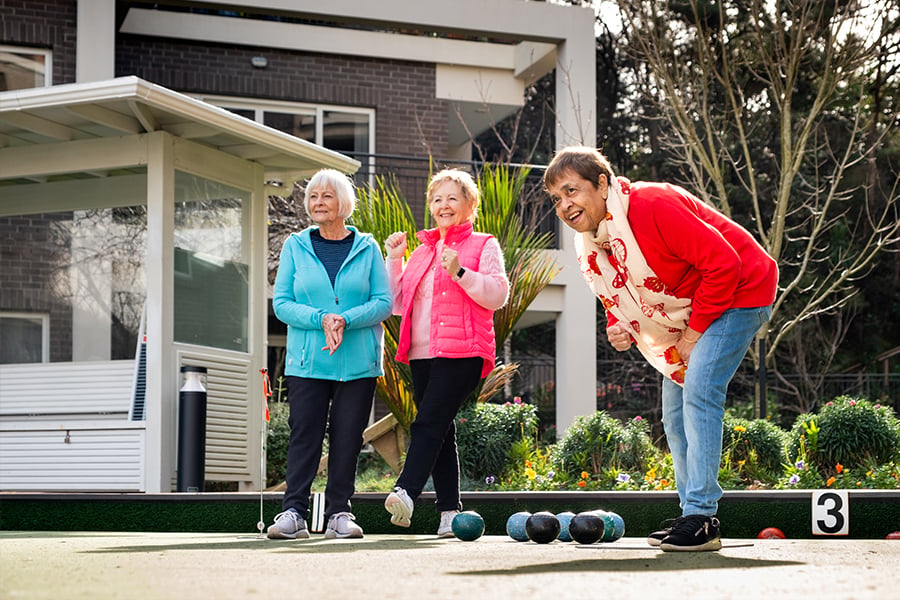
Moving into assisted living raises a few natural questions. What happens to your independence? Will you still feel like yourself? For most people, the extra help with daily tasks is welcome. It's the thought of quiet, empty days, or drifting away from the hobbies and people who make life feel like your life, that can make you pause.
It may be reassuring to know that a well-run retirement village should do the opposite of shrinking your world. Staying active, staying curious, and staying connected to others are three of the most reliable ways to hold onto your independence as you age, and that's exactly what a good activities programme is designed to support.
Regular social and physical engagement is consistently linked to better cognitive health and wellbeing in later life. The Lancet Commission on dementia prevention, intervention and care found that up to 45% of dementia cases could potentially be delayed or prevented by addressing a set of modifiable lifestyle factors, including social isolation and physical inactivity.
Staying engaged isn't just enjoyable – it's one of the most protective things you can do for your long-term brain health.
Why activities are important for seniors in assisted living
Regular activity (physical, social and mental) makes a big difference as we get older. It helps us to:
- Preserve physical strength and balance
- Encourage mental sharpness and cognitive agility
- Reduce the risks associated with social isolation
- Restore a sense of daily accomplishment and fun
- Improve mood and overall wellbeing
Fun activities for seniors in assisted living help older adults maintain their physical independence, mental sharpness, and social joy, making community engagement a true pillar of healthy ageing, not just a nice-to-have.
Signs of low engagement
Some signs that someone may need more activity or assistance are:
- Increased social withdrawal and/or fatigue
- Rapid decline in physical mobility
- Noticeable changes in mood
How many activities are ideal for seniors?
A good benchmark for older adults is to aim for a mix of 3 to 5 structured physical, cognitive, and social activities each week to maintain optimal wellbeing.
There's no single number that suits everyone because it depends on individual energy levels, mobility, and what you actually enjoy. But there is solid guidance to work from, at least for the physical side of things.
The Ministry of Health recommends that adults aged 65 and over aim for:
- At least 30 minutes of moderate-intensity physical activity five days a week
- Muscle-strengthening activities two or more days a week
- Balance and flexibility activities three or more days a week
There’s no fixed number for social and cognitive activities, but the same underlying principle holds: aim for a healthy mix spread across the week rather than cramming everything into one or two big days. A morning walking group, an afternoon of trivia, and a quiet evening at home will generally serve you better and tire you less than three back-to-back outings.
Types of activities for assisted living communities
Assisted living at Ryman doesn't mean retreating to a quiet corner unless that's your preference. Residents living in a serviced apartment have full access to the same active and varied lifestyle as independent living residents, including:
- Low-impact sport: Most Ryman villages feature a heated indoor pool for gentle swimming or water-based classes, along with indoor bowls and ACC-accredited Triple A exercise classes.
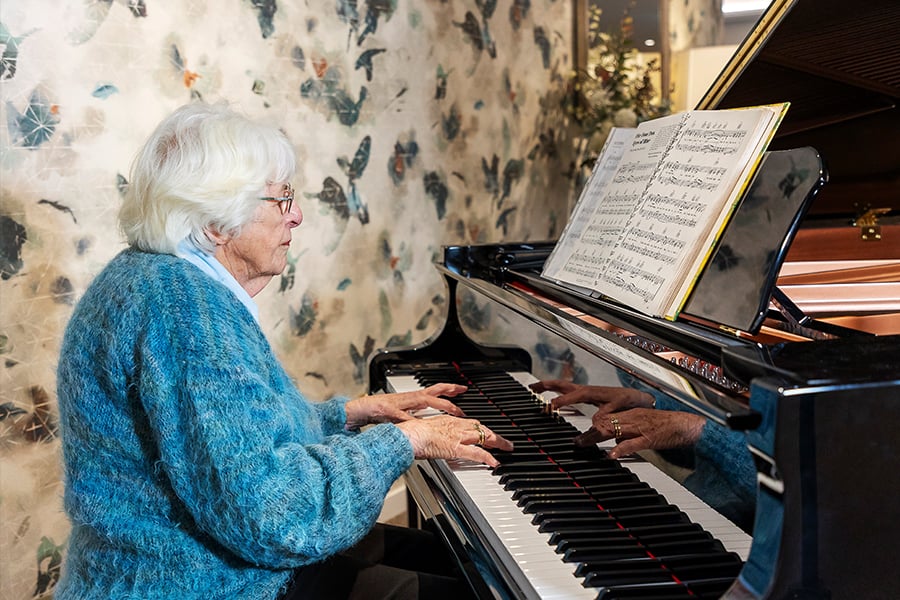
- Fine arts, music and choir groups: From art exhibitions and fashion shows to choir performances, music appreciation sessions, there is always something on the calendar to look forward to.
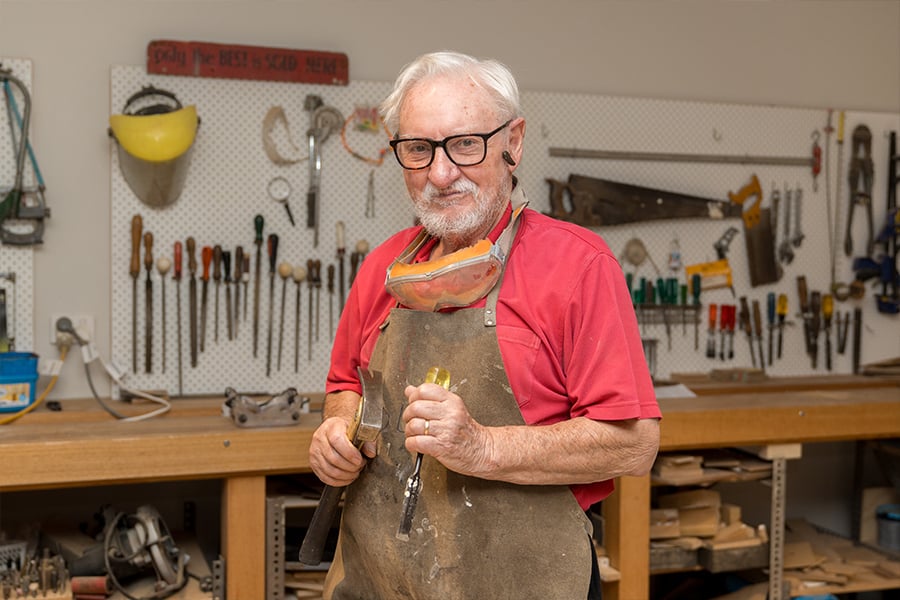
- Hands-on hobbies: Dedicated workshop and hobby spaces for everything from woodworking and quilting to creating art.
Easy ways to stay involved every day
You don't need to fill every slot on the activity calendar to feel the benefits. Some ways residents stay engaged include joining a regular walking group, pulling up a chair at a shared table for trivia night, or heading along to the weekly village Happy Hour to catch up with neighbours.
_web.jpg?width=900&height=600&name=Triple%20A%201%20(2)_web.jpg)
Physical activity programmes: when are they helpful?
A structured fitness programme is worth considering if you've noticed a loss of balance or a few near-misses, if you're rebuilding confidence after an illness, or if you're simply after a safe, sociable way to move more.
The benefits of a supervised programme
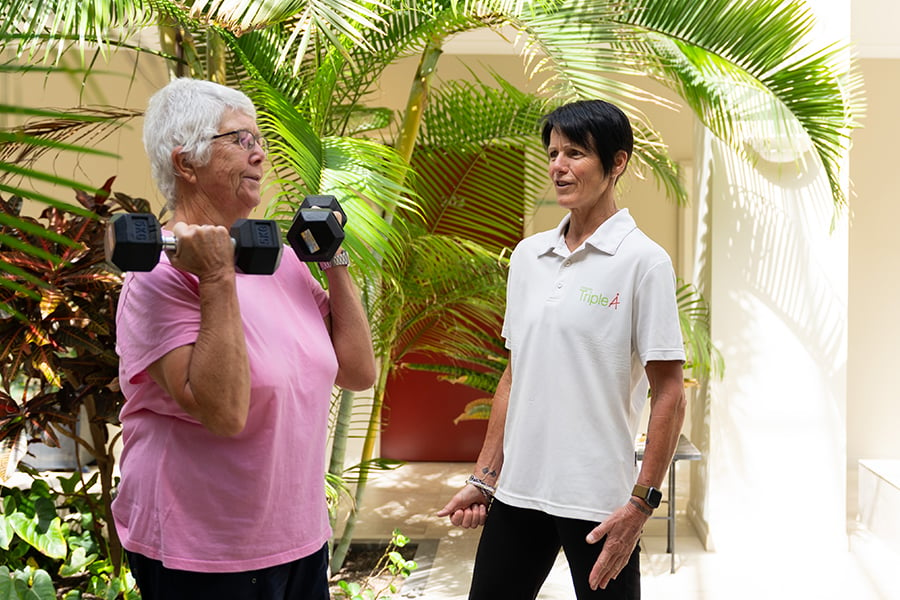
Supervised programmes that focus on functional strength rather than intensity, and double as a social outlet are a good option for seniors. Look for certified instructors who understand the needs of older adults, and a programme that offers a range of options to suit all levels of fitness rather than one-size-fits-all.
Ryman's Triple A (Ageless, Active, Aware) programme is a good example: it's free to Ryman residents, caters to all ability levels, and includes everything from Functional Fitness and circuit classes to a gentler "sit and be fit" option. Like all activities at Ryman, participation in Triple A is entirely up to each person, but many of those who go reap wellbeing benefits.
Resident Bruce says, "I go 3 times a week – I'd go 5 but I've got golf on Tuesdays and Thursdays. I do Triple A for 40 minutes, and then go for a 30-minute swim in the pool. I've always loved the water, but I never would have gone to exercise classes before – I just couldn't be bothered. Everything's here for me – it takes me 3 minutes to walk to Triple A. I see all my neighbours on the way."
Cognitive activities for seniors in assisted living: what to know
Is brain training effective for older adults?
Yes – activities that challenge memory and problem-solving are effective at preserving mental pathways, and they're enjoyable done alone or in a social setting. Make group activities collaborative rather than competitive.
Types of cognitive activities worth trying:
- Puzzles and group trivia – Ryman’s Engage activity programme includes Mind Benders sessions for these pastimes
- Lifelong learning through lectures and classes, in person or online
- Book clubs
- Creative pursuits like painting, knitting and pottery
- Sharing your own skills and experience with others
Structured activities vs spontaneous leisure: what's best?
Both have their place, and the most interesting and rewarding routines often include a blend of the two.
| Option | Primary benefits | Considerations |
| Structured activities | Socially engaging, professionally supervised, builds routine | Usually means adhering to a set calendar |
| Spontaneous leisure | Completely flexible, relaxing, independent | Can be isolating if too much time is spent on solo activities |
Tips for introducing new activities safely
- Start small – get started with one or two activities a week
- Listen to your body’s cues, and always rest when you need to
- It’s a good idea to check with your doctor before beginning a new exercise routine
As confidence grows, gradually expand into more activities or higher-intensity options. A good tip is to have an ‘accountability buddy’, a friend or neighbour who participates in the activity with you, as you’re more likely to keep up a positive new habit if you aren’t doing it alone.
Frequently asked questions
Ryman supports wellbeing through community
Moving into assisted living isn't about winding down – it's about having a little extra support to keep doing what you love, and the freedom to try new things. The ideal is not to have a smaller world, but a fuller one.
As fishing enthusiast and Ryman resident Neil put it when asked about life in his village, "Quite honestly, it's the best thing I've ever done."
Come and see for yourself
Why not come for a village visit? Book a tour of a village near you to see it for yourself. Call Ryman on 0800 000 290 or contact us for more information.
by Christine McCurdy | Aug 13, 2026
In-home care vs assisted living costs: what’s the difference in New Zealand?
Find a Retirement Village in New Zealand