
What is active senior living?
Active senior living is about adopting a mindset and lifestyle that empowers you to remain mobile and independent. By incorporating regular exercise, social interaction, and mental stimulation into your day-to-day life on a regular basis, you’ll improve your overall wellbeing and increase your chances of remaining independent for longer.
What this means for you
Staying active as a senior is a way of life that can help you to stay energised, connected, and confident in retirement.
Why staying active is essential for seniors
An active lifestyle is one of the best ways to support healthy ageing. Staying active as you get older has more benefits than simply maintaining physical fitness: it can raise your mood, improve your balance to prevent falls, and help you maintain the strength to perform everyday tasks.
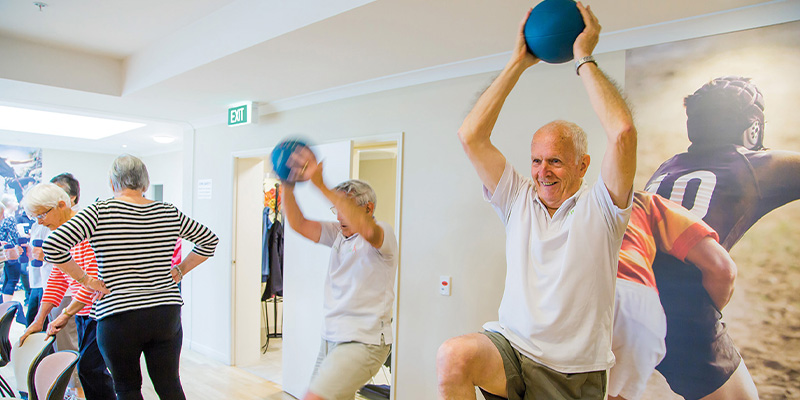
At Ryman we see the benefits every day of remaining active. Residents who take part in regular fitness sessions and walking groups in Ryman villages often report:
- Improved mood and reduced stress
- Increased energy and mobility
- Greater confidence in moving around safely
Ryman offer a variety of wellness options within our village communities, including walking groups, village amenities, and ACC-accredited Triple A exercise classes for all levels of ability.
Staying active to stay biologically younger
Ryman resident Leigh Elder, now in his 80s, credits his active lifestyle for keeping him young. Most days he dedicates a couple of hours to exercise, whether it’s walking, playing golf, stretching, or weight training. Leigh believes this routine has helped lower his biological age, and has inspired other residents to join him in regular stretching and resistance workouts.
While 20% of ageing is determined by our genes, Leigh says that 80% of ageing can be influenced by positive changes to our lifestyle and can actually turn back our biological clock.
“The good news is that it is never too late to reverse some of that cell damage and make yourself biologically younger by making a few permanent lifestyle changes," he says.
%20(Large)%20crop.jpg?width=1277&height=937&name=IMG_9321%20(1)%20(Large)%20crop.jpg)
Ryman resident Leigh Elder still exercises nearly every day in his 80s.
Resistance band exercises for independence and health
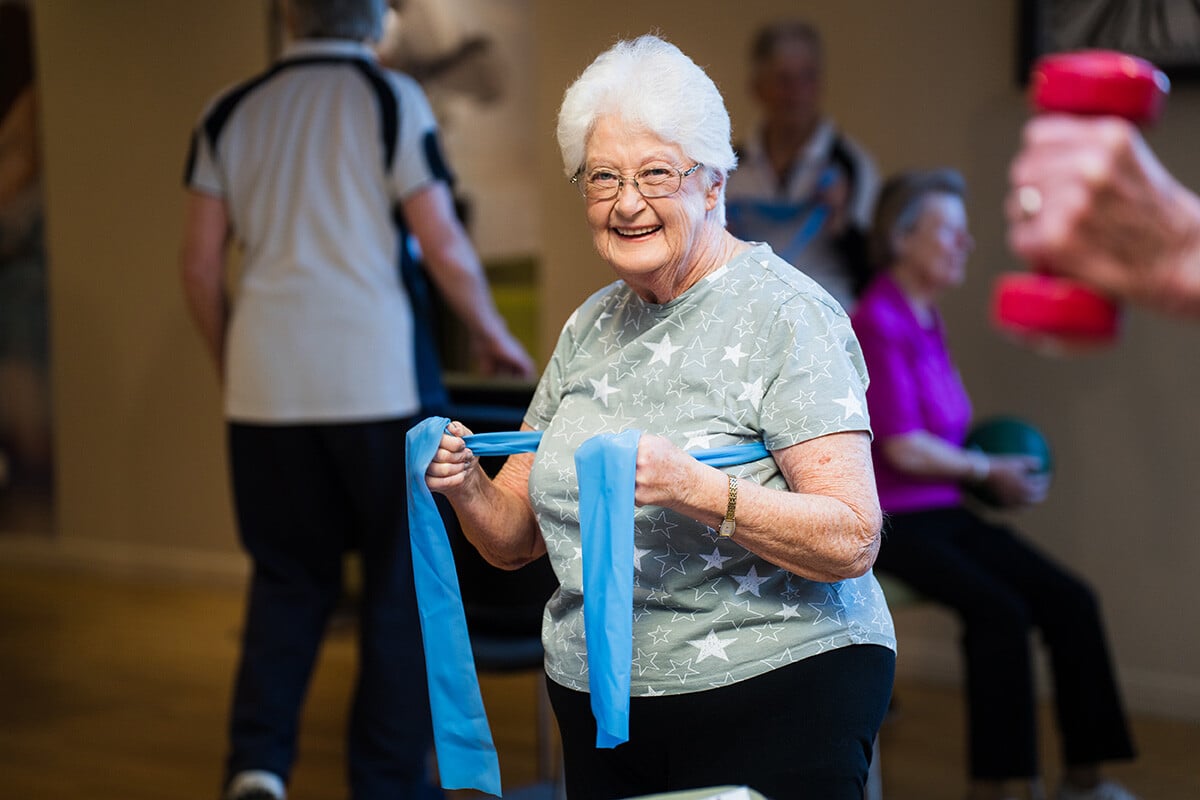
Resistance band exercises are ideal for older adults. They are a gentle, joint-friendly way to build strength, improve flexibility, and improve balance – all of which are key factors in helping you to maintain your independence.
Because resistance bands are lightweight, portable, inexpensive, and easy to use, they’re perfect for exercising at home or in group classes like those offered at Ryman.

A Ryman Triple A seated group exercise class using resistance bands.
Key benefits of resistance band exercises for seniors
- Gentle on joints: Unlike weights, resistance bands provide smooth, controlled tension, reducing strain on joints and tendons.
- Builds strength and balance: Supporting everyday movements like standing from a chair or carrying groceries.
- Perfect for group exercising: Group sessions make exercising fun and social.
- Portable and versatile: Whether at home or on holiday, bands make it easy to keep up with your fitness routine.
Getting started with resistance band exercises in New Zealand
Before beginning any new exercise program, it’s important to talk to a healthcare provider or fitness professional, particularly if you have existing health conditions.
Tips for beginners:
- Consult with a professional before starting a new routine, to be sure that you are doing the exercises correctly and safely.
- Start with a light resistance band and increase gradually as you gain strength.
- Focus on slow, controlled movements to get the most benefit and avoid injury.
- Combine resistance band exercises with other wellness programs, like walking groups or balance classes.
Understanding resistance bands and their uses
There are several types of resistance bands to choose from:
- Loop bands: Great for lower-body exercises like leg lifts.
- Tube bands with handles: Ideal for upper-body workouts like bicep curls.
- Flat bands: Versatile for stretching and strengthening exercises.
Begin with bands that offer light to medium resistance and progress as your comfort, confidence, and strength improve.
Safety tips:
- Check bands regularly for signs of wear and tear.
- Anchor bands securely to avoid slipping.
- Remember to keep movements slow and controlled to help prevent injury.

Resistance band exercises can be performed sitting or standing.
Simple resistance band exercises for seniors
Disclaimer: These exercises are completed at your own risk. Ensure you have a safe area to exercise, like a flat even surface that is free of any hazards. Make sure you exercise to your own ability and adapt the exercises if needed. You may find it helpful to have something to hold onto for balance, such as a steady chair, bench or table. If you begin to feel unstable or tired, stop and take a break. If you continue to feel discomfort or unwell, then promptly consult your medical professional.
Upper body resistance band arm exercises for seniors
These exercises can be performed sitting or standing.
- Bicep curls to strengthen arms for lifting and carrying: Hold the resistance band with both hands, step on the middle, and curl your arms upward toward your shoulders.
- Shoulder presses to improve shoulder mobility for reaching overhead: Sit or stand on the band, hold the ends at shoulder height, and press your arms straight up overhead.
- Tricep extensions to support everyday pushing movements: Hold one end of the band behind your back and the other in one hand overhead, then extend your arm upward to work the triceps.
Lower body resistance band exercises
- Seated leg presses to strengthen thighs and glutes: Sit in a sturdy chair, loop the band around your feet, and push your legs forward to straighten them.
- Side leg lifts for balance and hip stability: Hold onto a sturdy table or bench, stand with the band around your ankles, and lift one leg out to the side while keeping your torso upright.
Core and balance resistance band exercises
- Seated twists to help strengthen your core for better posture: Sit upright with the band held taut between both hands and gently twist your torso from side to side.
- Standing balance holds with bands to help improve coordination and prevent falls: Stand on one leg while holding the band anchored under one foot, maintaining balance for several seconds. Skip this exercise if you are concerned about losing your balance or modify by holding onto a sturdy table or bench with your free hand.
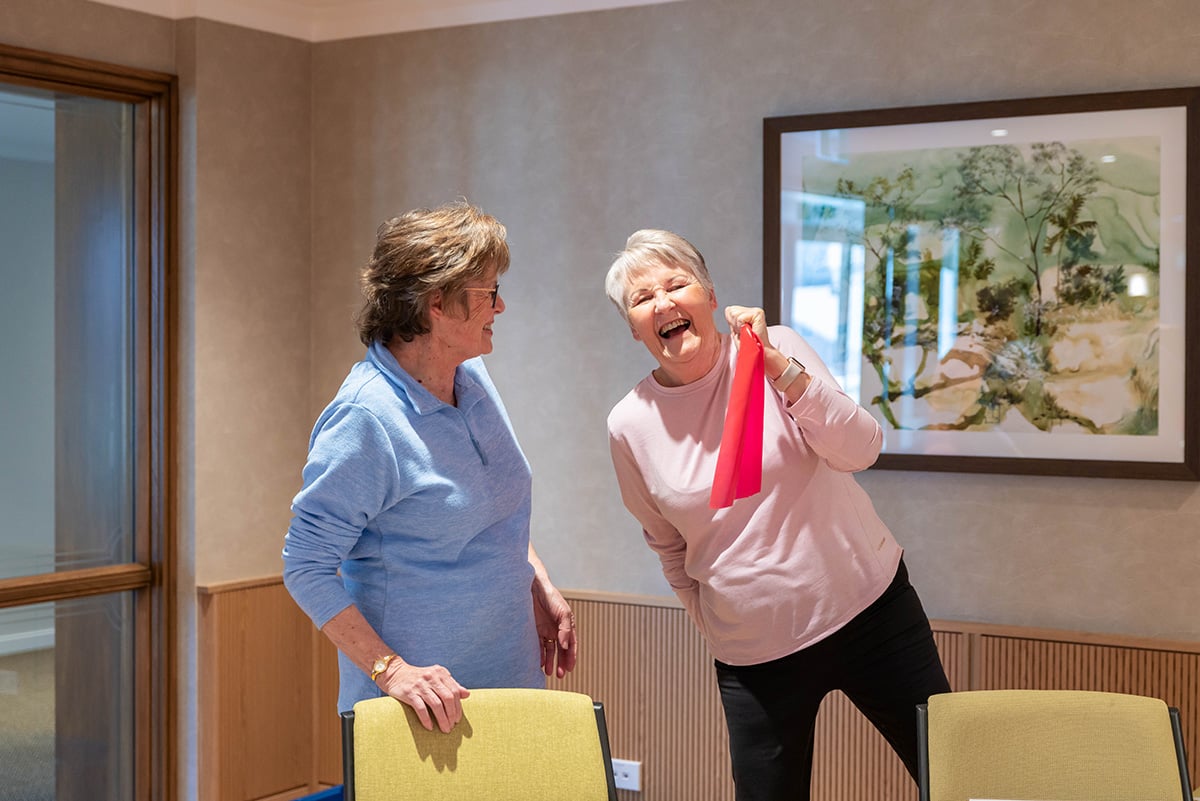
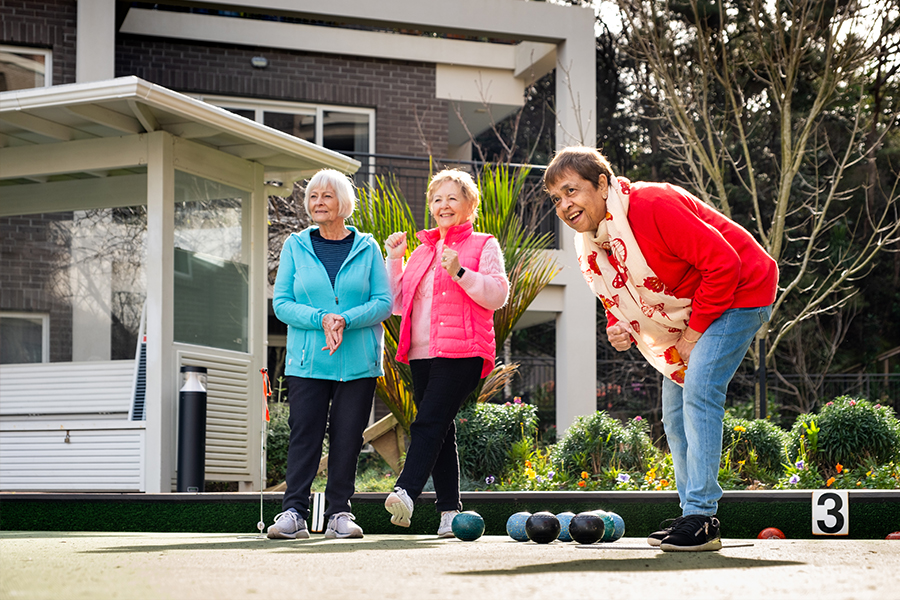
Exercising with friends can be about fun and community as well as fitness.
Group workouts in New Zealand’s senior living communities
Group classes are a good way to stay motivated, accountable, and have some fun as well.
Ryman Triple A (Ageless, Active, Aware) is a complimentary exercise programme available to all Ryman residents. It’s designed specifically for older people, is ACC approved and accredited, and is based on the belief that you’re never too old to exercise - you just need to find what’s right for you.
Group sessions offer:
- Motivation and accountability
- Social connection
- Fun and variety in workouts
Plus, afterwards it’s a good opportunity to have a post-workout coffee and catch up with other people in the class.
Ryman: supporting active senior living in New Zealand
Ryman villages are designed with your wellbeing in mind, offering pools, gyms*, Triple A group classes, and support from experienced fitness instructors.
Our commitment to active senior living means every resident has access to tools and programmes that promote a healthy, independent lifestyle.
If you’d like to find out more about the ways that Ryman support active living, contact a Ryman village near you to see for yourself how our communities help residents stay moving and connected.
*Amenities vary between villages, please check with your local village.
by Christine McCurdy | Nov 24, 2025
Balance exercises for seniors | Ryman New Zealand
Fun Activities for Assisted Living Seniors | Ryman