
.jpg?width=1620&height=1080&name=Sales%20advisors%20-%20July%202026-2%20(Large).jpg)
The many misconceptions around retirement living are something that Ryman sales advisors constantly have to correct, with many people often confusing retirement living with aged care.
William Sanders Village Sales Advisor Scott Bremner says people may arrive for a tour of the village and share their hesitations before they’ve even stepped inside.
“I often hear, ‘We’re not ready yet,’ or ‘It feels like giving up… like moving into a rest home,’ he says.
READ MORE:
- In-home care vs assisted living costs: what's the difference in New Zealand?
- Maintaining independence as we age: A guide for families and caregivers
It’s a common starting point. Many visitors may think back to the rest homes their own parents lived in, before people like Ryman co-founder Kevin Hickman helped reshape the retirement living landscape by creating communities that offered greater independence, choice and quality of life.
They assume a retirement village is only for when your health declines, and something you consider after a medical event, rather than before it.
Sales advisors often find themselves explaining that the reality is actually the opposite.
“The fact of the matter is, if people wait for that, it is frequently too late to move to an independent unit and enjoy everything that village life has to offer,” says Hilda Ross Village’s Joanne Funk.
People often deflect their concerns with humour, says Jo Clare from Possum Bourne Village.
“I often hear people say, ‘I’m too young to be in a village - they’re all old people in there!’”
.jpg?width=1620&height=1080&name=Sales%20advisors%20-%20July%202026-3%20(Large).jpg)
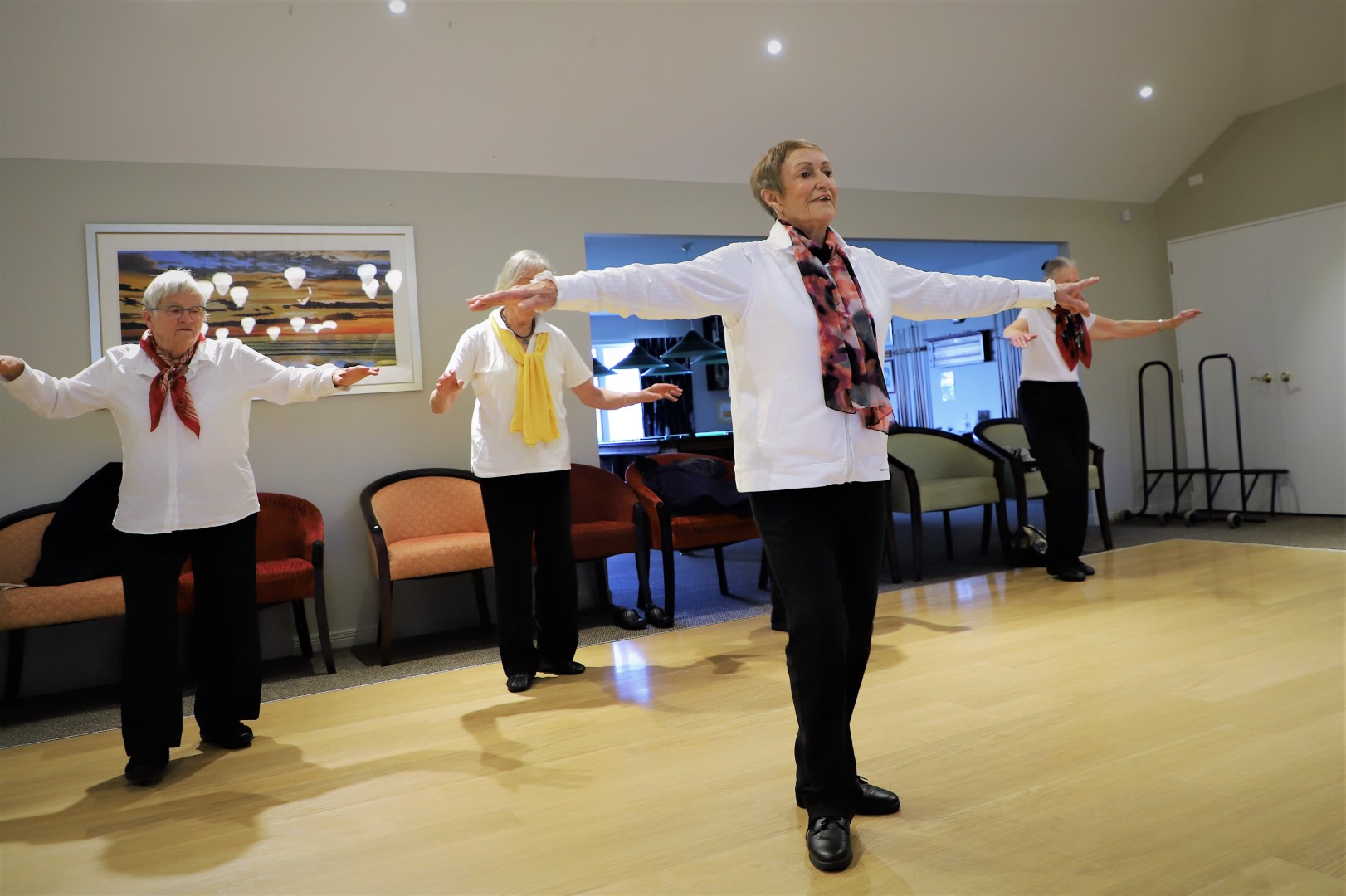
It’s an easy assumption to make from the outside. But once visitors see residents heading to fitness classes, meeting friends for coffee in the village café, or engaging in various group activities, their perception changes.
These communities are active, social, and varied. People are getting on with living, rather than worrying about ageing.
The subject of independence comes up repeatedly too, and is perhaps the biggest unspoken worry.
People don’t always say it directly, says Patrick Hogan Village’s David de Veth: “But you can feel it coming from them: they’re worried they will be less independent or will lose control over their life.”
Kiri Te Kanawa Village Sales Advisor Jane Smith says some share their concerns about loss of privacy.
“People think it will be like living in a fishbowl, and everyone looks into your townhouse when they walk past,” she says.
Sales advisors spend a good deal of time offering reassurance that independence doesn’t disappear and, if anything, it’s strengthened.
With maintenance taken care of and amenities on hand, residents have more freedom to spend their time as they choose, not less.
Privacy, too, remains intact. Villages are designed as homes first, not communal spaces without boundaries.
Practical questions inevitably follow, particularly around the financial side, with misunderstandings about how they work commonplace.
Typical questions include: How does the money work? When do we get it back? Will fees keep going if we leave? Isn’t the Deferred Management Fee charged again if we move within the village?
Financial structures can sound daunting at first, particularly with terms like Deferred Management Fee (DMF). Sales advisors spend time walking through it clearly: at Ryman the DMF is capped, it’s not ongoing indefinitely, and isn’t reapplied when transitioning within the village.
.jpg?width=1595&height=1080&name=Sales%20advisors%20-%20July%202026-8%20(Large).jpg)
Similarly, weekly fees paid in the village often cover costs people are already paying in their own homes - maintenance, insurance, amenities - but when compared side by side, they turn out to be surprisingly comparable or even less.
There’s also the persistent belief that moving in means sacrificing inheritance, with people often asking, ‘Doesn’t the village take everything?’
It’s another opportunity for clarification. The model is structured, transparent, and predictable, and importantly, many residents feel that the lifestyle plus the sense of security, peace of mind, and community are intangible benefits that you just can’t put a price on.
Sometimes, the simplest misconceptions are the most surprising, says Jane Mander Village’s Donna Newman.
“Lately I’ve had a lot of people say they weren’t aware that we had a pool and gym on site. Never mind the beautifully decorated shared spaces and multiple activities on offer.”
These are all features that can fundamentally shift the perception of a village from ‘somewhere to go later’ to ‘somewhere I could enjoy now’.
By the end of a visit, the tone has usually changed as the revelation has unfolded. It helps that residents walking past will often chime in with cheery words of advice: ‘Do it! You won’t regret it!’ or ‘Don’t leave it too late!’
Sales advisors notice the softening attitude, as reluctance turns into curiosity, as visitors start to imagine themselves in this environment.
That rather than ‘giving up’ something, it could actually look more like gaining something: community, peace of mind, and time to enjoy life - on their own terms.
by Maryvonne Gray | Aug 10, 2026
.jpg)
Betty’s midair fright changes the course of her life
Welcome wētā, rats rack off!