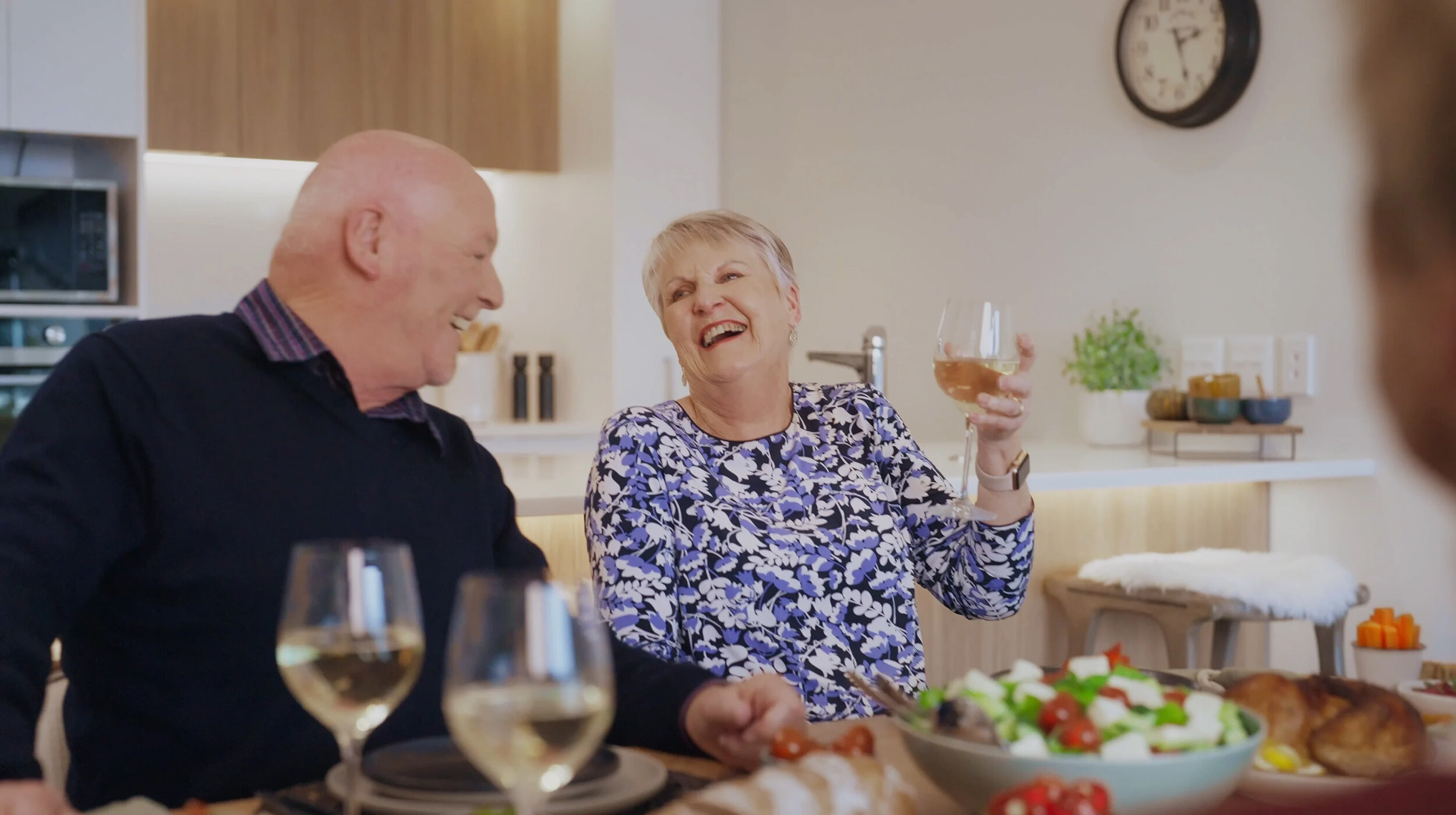

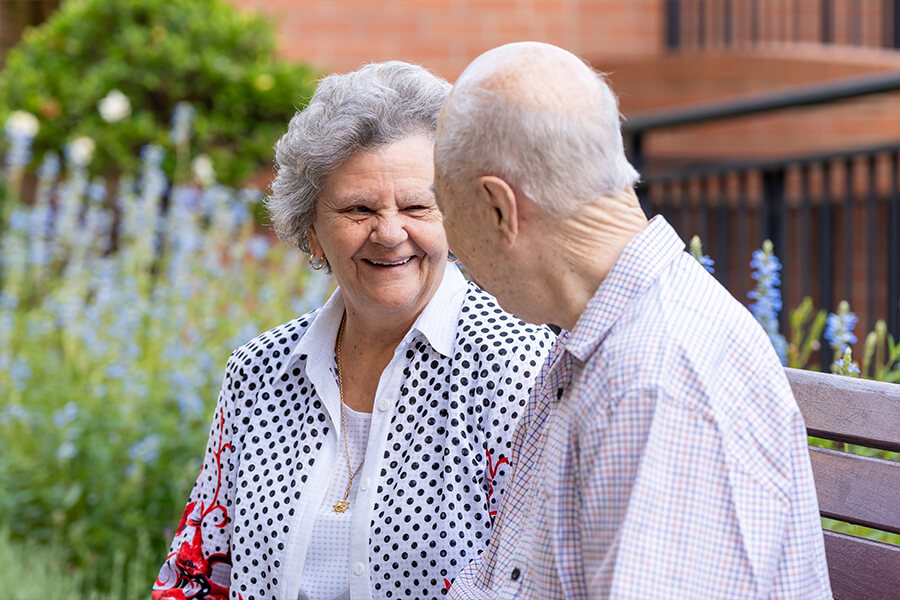
Moving into aged care as a couple is a major life change. It often comes with the emotional weight of concerns about independence, health, and the fear of being separated after years of sharing life together. What happens if one person needs a higher level of care than the other? Can you still stay together?
In these situations, exploring supportive, flexible aged care for elderly couples can help meet the needs of both partners, so you can continue living life together, even when your care needs differ.
Can couples live together in aged care?
Yes – many aged care facilities in New Zealand support couples living together.
Today, more providers recognise the wellbeing benefits of keeping couples together. At Ryman, we aim to keep couples together wherever possible.
Depending on individual needs, options may include:
- Sharing an apartment or townhouse together
- Living near each other within the same village – for example one person may live in a serviced apartment and the other lives nearby in the care centre
- Accessing different levels of care within the care centre
Flexible care arrangements mean each partner can receive the support they need while preserving daily connection, companionship, and shared experiences.
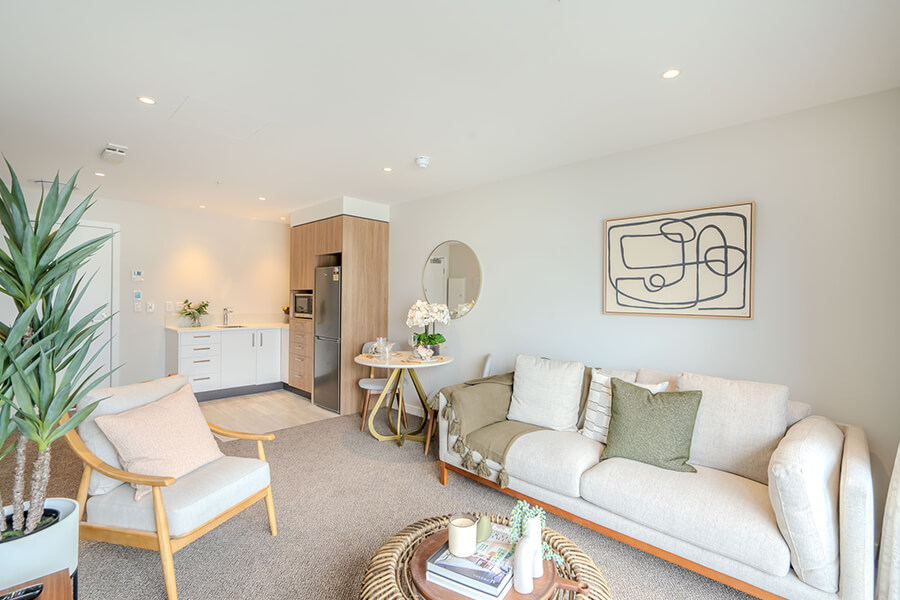
A serviced apartment living and dining area.
Assisted living for couples: what does it mean?
In the context of aged care, a serviced apartment is a self-contained home designed for older people who want to live independently while having access to daily support and services. Serviced apartments sit between fully independent living and rest home care. If care needs change over time, residents are often able to access higher levels of care within the same village.
A serviced apartment typically includes a private living area, bedroom, bathroom, and kitchenette. Residents live in their own space, but regular services are included to make everyday life easier and safer.
These services often include:
-
Daily meals (usually provided in a dining room)
-
Housekeeping and laundry
-
On-site staff available to provide assistance
-
Emergency call systems for added security
_web.jpg?width=900&height=600&name=DSCF4619%20(1)_web.jpg)
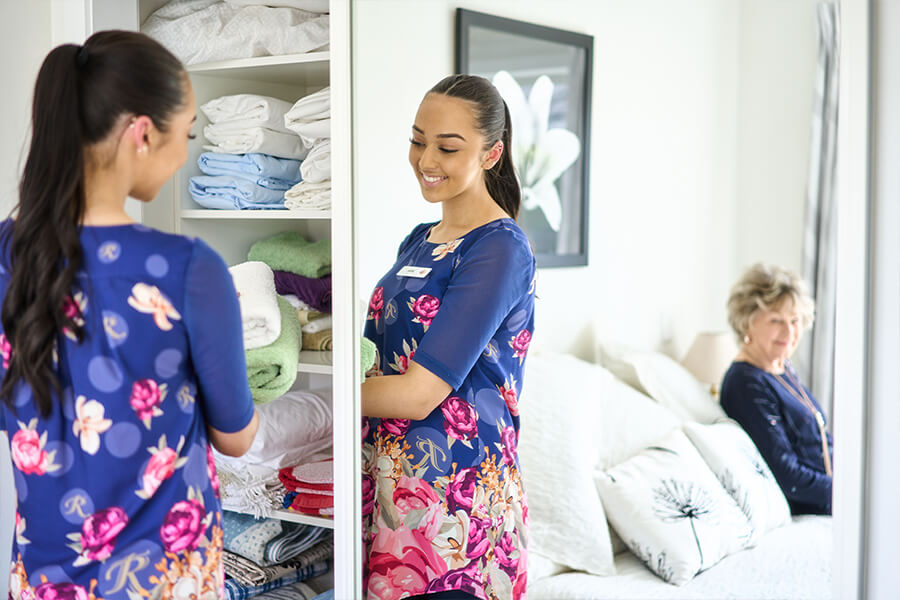
Assisted-living resident and housekeeper with fresh towels.
Serviced apartments are well suited to people who don’t need full residential care but do benefit from practical support with meals, chores, or peace of mind. They’re a good option for couples if one or both partners need some help but still want to live together in a private setting.
Like Ryman residents Tony and June, who have lived together in their large, sunny serviced apartment for over four years. With both having a few health issues to contend with, just the fact that there is help with daily chores has made life so much easier.
“It was the best thing we’ve done,” says June.
Find assisted living for couples near me
Ryman villages are located throughout New Zealand from Whangarei to Invercargill. They’re built within established local communities, meaning that in addition to being able to stay together, couples can remain close to whānau, friends, and familiar places.
Assisted living for couples with different needs
A question that couples sometimes ask is, “What if our care needs aren’t the same?”
It’s actually very common for one partner to need more support than the other. Ryman’s model is designed to support assisted living for couples with different needs, without forcing separation.
This flexibility allows one partner to receive higher-level care while the other remains more independent within the same village.
Couples can continue to share meals, visits, and daily routines, while each person’s dignity, independence, and individual needs are respected.
_web.jpg?width=900&height=600&name=1E7A0723%20(3)_web.jpg)
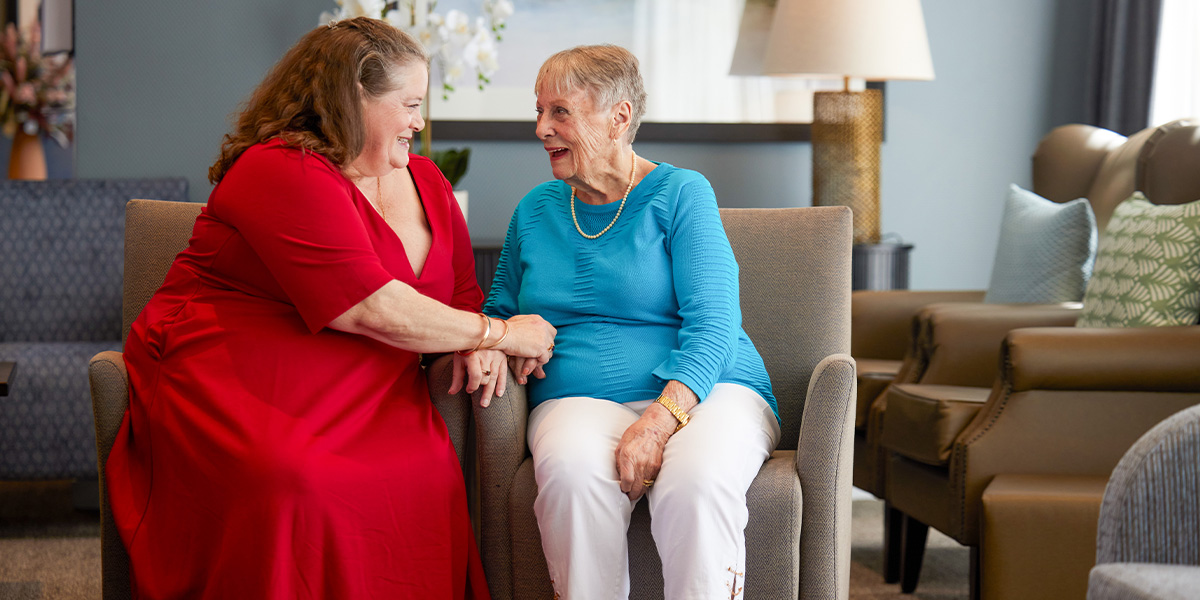
In Ryman villages, couples can still remain near each other if one person goes into the village care centre, and the other is able to stay in their serviced apartment.
What happens when one partner goes into aged care?
When Ryman resident Edna moved into Ryman’s Bruce McLaren Village, she and her husband Des were able to stay near each other, even with very different needs. When Edna moved into an independent apartment in the village, Des transferred to the onsite special care unit and Edna would walk down every day to visit him for 18 months until he passed away. Later, she transferred to a serviced apartment and now lives in the rest home in the village.
If one partner’s health or mobility needs change sooner than the other’s, this may mean they move into assisted living or residential care while the other remains living independently. The partner who doesn’t yet need care can maintain their independence for as long as they’re able, choosing to move later if or when it feels right. This usually reduces stress for both partners, as taking on a caregiving role at home can be very physically and emotionally demanding.
One common pathway is:
-
One partner moves into assisted living or residential aged care first
-
The other remains independent nearby
-
Living and care arrangements are adjusted gradually for both partners as needs change
Aged care facilities for couples: how Ryman makes it possible
Ryman villages typically include:
This means couples don’t need to face disruptive moves or unfamiliar environments as needs change, making it easier to age in place together.
How ageing in place is supported:
-
Dedicated on-site care and clinical teams
-
Purpose-designed spaces that accommodate couples
-
Seamless transitions between care levels
Benefits of choosing aged care for couples
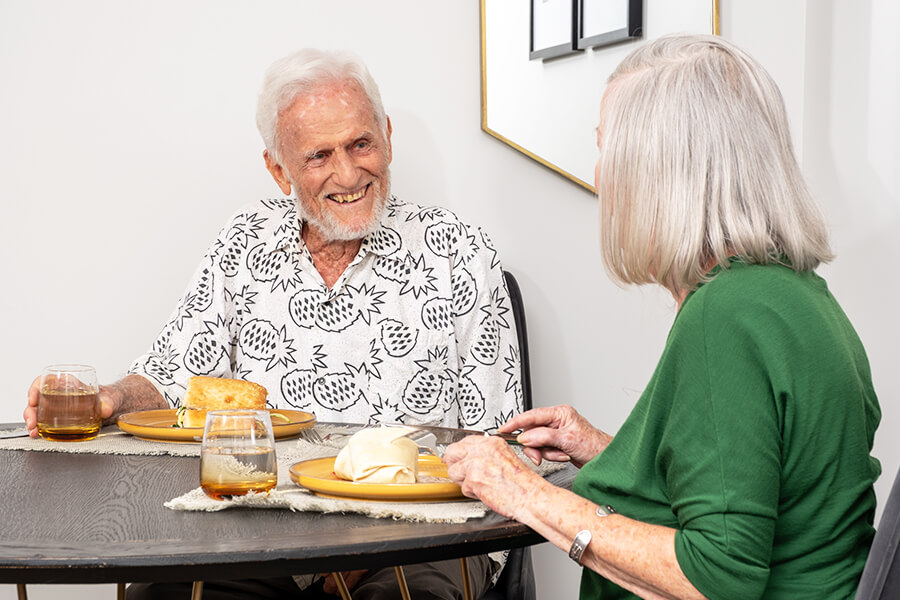
When care is designed with both singles and couples in mind, it supports not only physical needs, but emotional wellbeing and peace of mind.
Some of the benefits are:
-
Improved emotional wellbeing: Staying connected and continuing to share daily routines can reduce feelings of anxiety that can arise during major life changes.
-
Better health outcomes: When each partner has access to the right level of care at the right time, health needs can be managed more effectively. Reduced caregiver strain, consistent professional support, and the reassurance of being close to a loved one all contribute to better overall wellbeing.
-
Continued companionship and shared experiences: Living within the same home – or village – means couples can continue to enjoy meals together, attend activities, and spend meaningful time with each other.
-
Peace of mind for families: Families often feel reassured knowing both parents are supported, safe, and able to stay together, with flexible care options ensuring arrangements can adapt over time, without unnecessary disruption or separation.
Speak to our friendly team
You don’t have to face this transition alone. At Ryman, your next chapter can still be shared.
To explore your options, talk with us today or book a village tour
FAQs
Useful resources
by Christine McCurdy | May 12, 2026
Difference between assisted living and nursing home
In-home care vs assisted living costs: what’s the difference in New Zealand?