

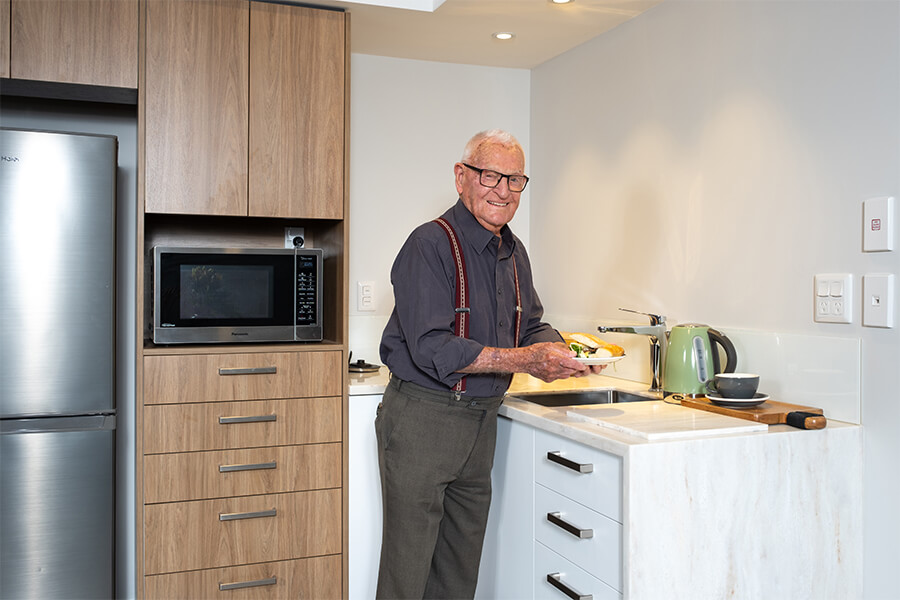
At some point, many families begin a new conversation, one that’s not about what an ageing parent can no longer do, but about how they want to live next.
For many older adults, assisted living in a serviced apartment is a way to shape that next chapter on their own terms, maintaining independence while enjoying practical supports such as housekeeping and chef‑prepared meals that make daily life easier.
It is not residential care – instead it bridges the gap between fully independent living and rest home‑level care.
This guide is designed to help families navigate that transition with confidence, offering clarity on what to expect when moving a parent to assisted living for the first time.

A tranquil light-filled one-bedroom serviced apartment in a Ryman village.
11 signs it might be time for assisted living
Below are common signs that may indicate your parent could benefit from moving into an assisted‑living serviced apartment where daily support, safety features, and social connection can significantly improve their wellbeing.
-
Frequent falls or near‑misses: Unexplained bruises, unsteadiness, difficulty navigating stairs, or struggling to get in and out of the shower can point to increasing safety risks.
-
Medication mix‑ups: Missed doses, double‑dosing, confusion about prescriptions, or relying on others to organise medication.
-
Poor nutrition or noticeable weight changes: An empty fridge, expired food, forgotten meals, or reliance on takeaways may indicate difficulty maintaining healthy routines.
-
Declining personal care: Wearing the same clothes for days, infrequent bathing, or trouble managing continence.
-
Household tasks piling up: Unopened mail, unpaid bills, clutter, declining hygiene, or general difficulty managing the home.
-
Withdrawal and loneliness: A drop in social visits, lack of confidence going out, cancelling regular activities, or appearing disconnected.
-
Memory lapses that affect safety: Leaving appliances on, getting lost, wandering, or repeated confusion about time, day, or place.
-
Driving concerns: New dents on the car, traffic infringements, close calls, or family feeling unsafe when they are driving.
-
Carer burnout: Family members feeling overwhelmed, exhausted, anxious, or unable to keep up with increasing care needs.
-
Poorly managed health issues: Recurring infections, unmanaged chronic conditions, missed GP or specialist appointments, or difficulty following treatment plans.
-
Increased calls for help: More frequent emergency calls, after‑hours crises, or urgent requests for assistance.
Moving from one care provider to another in New Zealand
If your parent is already living in a rest home or assisted‑living environment but wants or needs to move to a different provider – perhaps to be closer to whānau, to better suit their preferences, or because their needs have changed – there are a few steps that can help ensure the transition is safe and straightforward.
This process of moving from one aged care facility to another can feel complex, but with the right planning and communication, it can be managed smoothly.
-
Support the transfer process: Work with both providers to coordinate the clinical handover, including medications, care plans, and any allied health or specialist notes. Make sure outstanding fees are settled and agree on a move date that allows whānau to be present and support your parent on the day.
-
Understand the financial implications: Seek independent legal advice so you’re clear about the terms of ending the current agreement (such as notice periods, exit fees, or refundable components) and how the new provider structures their contract. This helps avoid unexpected costs or delays.
-
Prioritise continuity: Talk with the new provider about how they will maintain your parent’s established routines, preferences, and therapies. This continuity is especially important for people living with dementia, as familiar patterns can reduce stress and support wellbeing during the move.

If needs change, Ryman offers a range of onsite care options.
Moving a parent with dementia to assisted living
If your parent is living with early‑stage dementia such as mild memory loss or occasional difficulty with daily tasks, they may still manage well in an assisted‑living serviced apartment, provided the environment is supportive and feels familiar. Preparing early and moving slowly will help ease the transition.
-
Prepare gradually. Keep conversations short, positive, and simple. Introduce the idea slowly and revisit it over time rather than making sudden announcements. If you're moving into a serviced apartment within a retirement village, reach out to the village team for guidance.
-
Build familiarity. Set up the new apartment using meaningful, comforting objects such as a favourite armchair, family photos, a quilt, familiar artwork, or familiar music playlists. These cues help reduce disorientation and reinforce a sense of home.
-
Keep routine steady. Maintain consistent wake times, meals, and daily activities. Routine helps people with dementia feel safe and grounded.
-
Minimise overwhelm. Plan a smooth, low‑stress moving day: Limit the number of people involved, move at a quiet time of day, avoid rushing, prepare the new space ahead of time, and keep the first 48 hours simple and calm.
If their needs change over time
If dementia progresses, your parent may eventually need a higher level of specialised support than assisted living can provide. In these situations, a specialist dementia care centre such as those offered within most Ryman villages will be better aligned with their needs.

An onsite hair and beauty salon is just a short stroll away.
Questions to ask when moving a parent to assisted living
Assisted living providers offer different levels of service, so it’s best to choose one that can continue to support your parent if their needs increase, helping to minimise disruption and maintain stability.
For example, Ryman villages offer both independent and assisted living, supported by a full range of onsite care options. Your parent can begin with the level of support that feels right for them, and if their needs change, they’ll have priority access to the village care centre.
When you tour retirement villages or speak with providers, take a list and compare answers:
-
Support options: What support is available now, and what is available if needs increase?
-
Care options for the future: Can residents transition from assisted living to residential aged care or dementia care within the same village?
-
Team: Who provides day‑to‑day support? What are staff training and ratios like? Is there 24/7 onsite assistance?
-
Lifestyle: What activities, clubs, exercise and social events are offered? Are there opportunities to get to know other residents and form friendships?
-
Meals: Are meals provided or optional? Can dietary needs be accommodated?
-
Apartment features: Safety inclusions (grab rails, call bells), private ensuites, kitchenettes, balconies, orientation to sunlight, etc.
-
Pets: Are pets welcome in the village and under what conditions?
-
Fees: What’s covered in weekly or monthly fees? Which services are optional or pay‑as‑you‑go?
-
Contracts: What are the key terms (length, exit provisions, refurbishment or reinstatement, village fees)?
-
Family involvement: How are families kept informed? Are there regular welfare checks?

Assisted living residents enjoy the option to receive delicious and nutritious meals every day.
Talking with a parent about assisted living
Starting a conversation about assisted living can feel delicate and emotionally loaded. Family dynamics, past roles, and unspoken expectations can surface, and both parents and adult children may experience guilt, worry, or resistance. That’s all normal. Most families need several conversations, not just one.
A respectful, collaborative approach helps these discussions feel less like a confrontation and more like a shared problem‑solving process.
Lead with empathy. Begin by asking open‑ended questions about how your parent is managing day‑to‑day life. This helps them express challenges in their own words and reduces defensiveness. Listen for moments where added support could help – such as mobility, cooking, cleaning, loneliness, or safety concerns.
Share observations, not accusations. Frame concerns using neutral, factual observations rather than criticism. For example, “I’ve noticed the stairs seem to be harder for you lately. How are you finding them?” is much better than, “You can’t manage the house anymore.” This approach preserves dignity and keeps the conversation grounded in shared reality.
Involve them in the process. Visit assisted‑living providers together. Seeing options firsthand often replaces fear with clarity. It also allows your parent to voice preferences about the village, environment, location, community and the feel of different serviced apartments.
Involve trusted professionals. Sometimes parents accept input more readily from a GP, specialist, or allied health provider than from family. A neutral, clinical perspective can help frame safety concerns or support needs without triggering family tension.
Reassure about independence. One of the biggest fears is losing independence. Emphasise that assisted living in a serviced apartment is designed to enhance independence, not diminish it. With meals, housekeeping and help on hand if needed, many parents discover they have more energy for hobbies, friendships, and enjoyable routines.
What can you do if your parent refuses assisted living?
If your parent insists that they’re fine even when the signs suggest they’re struggling, it’s often because the idea of assisted living feels overwhelming or threatening to their independence.
Give it time. Most parents don’t agree to assisted living on the first conversation. If there’s no urgent safety risk or severe carer burnout, allow the discussion to unfold over weeks or months. This helps reduce defensiveness and builds trust.
Find the underlying ‘why’. A firm no often masks deeper worries like fear of losing independence, concerns about affordability, or misconceptions about what assisted living is. Addressing the root cause is far more effective than debating the decision itself.
Use neutral, observable evidence. Instead of arguing, gently share what you’ve noticed. Perhaps that’s falls, medication slips, social withdrawal, or missed appointments. If appropriate, encourage their GP to offer a clinical perspective, which can carry more weight.
Give your parent as much control as possible. Autonomy matters. Invite your parent to choose which villages to visit, compare serviced apartments, or decide what kind of support they would find most helpful. Feeling involved can reduce fear and increase acceptance.
Focus on the benefits, not the losses. People respond better when they see what they gain – safety, social connection, less housework, daily meals, peace of mind – rather than what they’re giving up.
Try a phased approach. Sometimes starting with in‑home support helps your parent gradually accept that extra help can be positive. This gentle transition can make the eventual move to assisted living feel more natural and less abrupt.
If safety becomes critical. If there are serious concerns about decision‑making capacity or persistent risks (falls, wandering, unmanaged health issues), seek medical assessment and legal advice. The goal is to protect your parent’s rights while also ensuring their safety and wellbeing.

Ryman's Triple A exercise classes help to improve balance and build strength, offering health benefits for assisted-living residents.
Moving parents into assisted living: emotional and practical tips
Unlike government‑funded residential aged care in New Zealand, moving into assisted living in a private retirement village (such as a Ryman serviced apartment) does not require a NASC needs assessment. However, it’s still important to approach the move with a clear plan.
Proactive planning gives families more choice, more time to prepare emotionally and practically, and a smoother settling‑in process. Many challenges can be avoided simply by starting early.
Step‑by‑step guide
Recognise the signs that extra support may be needed. Look for changes in mobility, memory, personal care, nutrition, social connection, or home safety. Early awareness helps families act proactively rather than waiting for a crisis.
Start the conversation early. Talk with your parent or parents about what matters most to them: their priorities, any worries they may have, and what a good day looks like. Understanding this will help guide the choices you make together.
Organise assessments and gather information. While assisted‑living in a retirement village doesn’t require a NASC needs assessment, it can still be helpful to speak with a GP or health professional to understand current needs, medications, mobility considerations, and any future planning required.
Explore assisted living options. Look into what’s provided in assisted‑living or serviced‑apartment packages. These may include meals, housekeeping, personal care support, transport, welfare checks, and social or wellbeing activities.
Find the right fit. Book a tour to meet the team, chat with residents, and experience the village lifestyle first‑hand. Seeing the environment and services in person can be hugely reassuring for both you and your parent. Find a retirement village near you.
Understand costs. Review accommodation pricing, daily service package inclusions, and how costs may change if your parent’s health needs change, and residential aged care is required in the future.
Gather necessary information. This may include medical history, current medications, mobility considerations, and any dietary needs. Having this ready helps the village team tailor support from day one.
Support the transition. Help with sorting and downsizing belongings, packing, and setting up their new home. Making the space feel familiar with treasured items can ease the adjustment.
Stay connected. Encourage your parent to join village activities, meet neighbours, and explore the community. Keep up regular family visits, calls, and outings to maintain a sense of continuity and comfort.

A friendly face and fresh towels delivered to the door.
How Ryman makes the transition easier
Ryman villages offer independent and assisted living, supported by a full range of onsite care options. Your parent can begin with the level of support that feels right for them, and if their needs change, they’ll have priority access to the village care centre.
This means:
-
They’ll be welcomed to the village with staff who help new residents meet neighbours, join activities, and settle in comfortably.
-
Support with a range of on-site care options if needs change.
-
Tailored support based on your parent’s routines, preferences, and wellbeing goals.
-
Qualified staff are onsite 24/7, and your parent is supported within a safe, connected community.
Moving a parent to assisted living checklist
Moving elderly parents into assisted living with confidence and care
Supporting an elderly parent as they transition into assisted living often brings mixed feelings even when the move is a positive one that will greatly improve enjoyment of life for both parents and family members.
This is where seeking support from professionals and visiting retirement villages near you can be reassuring and helpful.
To find out how Ryman can help, contact us on 0800 588 222 or book a tour to see how we’re redefining assisted living with care you can count on.
by Christine McCurdy | Apr 10, 2026

Aged care for couples | Ryman New Zealand

Difference between assisted living and nursing home