
.jpg?width=1200&height=801&name=2W3A7455%20(1).jpg)
For someone living with dementia, everyday tasks and routines can sometimes start to feel more challenging. Changes in memory, thinking, and communication may make it harder to recall recent events, process information, or find the right words. Over time, this can really start to affect confidence and independence.
Ryman is a leading provider of residential dementia care in New Zealand, supporting residents to:
- live in the moment,
- stay connected, and
- keep doing the things they enjoy in a safe environment.
We’ve found that simple activities that stimulate thinking and concentration such as memory games, can play an important role in supporting memory, lifting mood, and encouraging meaningful social connections.
By understanding each resident’s unique history, preferences, and abilities, we can tailor memory games for dementia that support wellbeing and a sense of connection.
What is the best game for people with dementia?
The best games for people with dementia have easy-to-understand rules, are already familiar to the person, and can be adapted to suit different levels of cognitive ability. Sensory engagement is also important, so games that involve touch, sight, or sound can stimulate the senses and encourage interaction.
Some suitable games for people with dementia include:
- picture-based bingo,
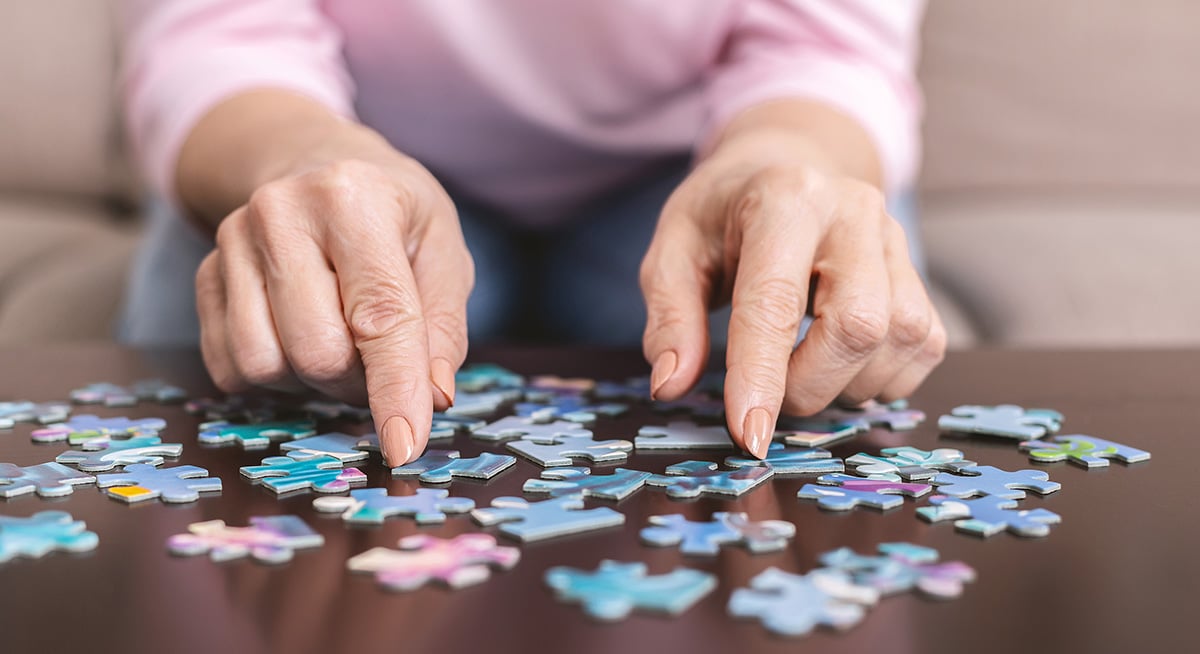
- large-piece jigsaw puzzles, and
- reminiscence games.
Picture-based bingo
This version of bingo replaces numbers with familiar images, such as animals, everyday objects, or nostalgic items. Using pictures makes the game easier to follow and helps spark recognition and conversation without the pressure of remembering numbers.
Large-piece jigsaw puzzles
Jigsaw puzzles with large pieces are ideal for people with dementia. They encourage concentration, hand-eye coordination, and problem-solving in a gentle, non-stressful way. Working on familiar images such as landscapes can also evoke positive memories.
Reminiscence games
Reminiscence games invite players to recall and share stories from their past, using photographs, music, or themed prompts. This helps to foster meaningful conversation with others and supports identity and emotional wellbeing.
How do you entertain someone with dementia?
Creating enjoyable experiences for someone living with dementia is about more than keeping them occupied – it’s about fostering moments of joy, connection, and purpose.
What sparks those moments will vary from person to person. Some may enjoy familiar games or puzzles, while others might prefer music, storytelling, creative arts, or gentle movement. Thinking about what they used to enjoy, and what they’re drawn to in the present, is a great place to start when planning meaningful activities.
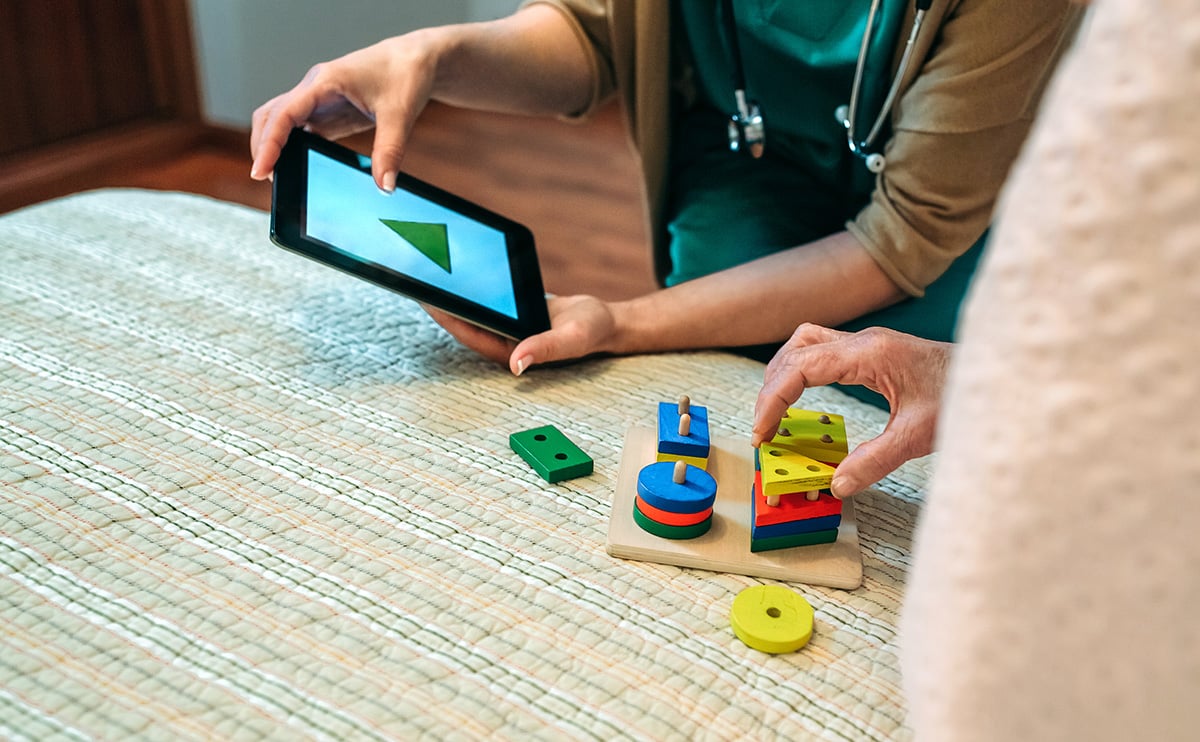
Matching geometric shapes
Suitable indoor games for people with dementia
Indoor games provide opportunities for people living with dementia to stay engaged, active, and connected, whatever the weather. At Ryman, we ensure indoor games are safe and enjoyable, so residents can choose to take part in ways that suit them best. If you’re a nurse or carer, you may be wondering, “what are the indoor games for dementia patients?” Here are a few options to consider:
Sensory games
Activities like textured puzzles, sensory mats, or sorting objects by touch help to gently stimulate the senses and encourage exploration in a calm, enjoyable way.
Reminiscence-based games
Use memory boxes, vintage photo games, and conversation cards to invite a person living with dementia to share stories from their past.
Movement-based games
Light physical activities such as balloon tap or a seated ball toss combine gentle exercise with fun, helping to support coordination and lift mood.

A memory box contains familiar objects with different shapes and textures
Modifying the 20 questions game
In the classic 20 Questions game, one person thinks of an object, and others ask up to 20 questions to figure out what the object is. In the 20 Questions game for dementia patients the game has been modified to be more accessible and enjoyable for people living with cognitive decline.
This game can be adapted for people living with dementia by choosing simple and familiar themes such as household items, pets, or foods, and using visual aids such as photos, objects, or cards to provide clues and make it easier for them to guess the answer.
This approach encourages gentle problem-solving and creates opportunities for dementia care residents to share memories. The game can be tailored to their interests, helping them stay connected and engaged in a way that feels positive and fun.
.jpg?width=1200&height=800&name=BNE%20-%20Ginny%20Denis%20-%20Care%20Centre%20-%20April%202025%20(5%20of%2042).jpg)
Ask questions that are familiar to the person with dementia
Board games suitable for someone with dementia
Simple, familiar, and visually engaging board games are suitable for people in dementia care. These types of games are often woven into daily activities in Ryman dementia care centres. They’re a gentle way to:
- encourage group participation,
- stimulate mental activity, and
- create a sense of achievement.
Call-to-Mind
Call-to-Mind is a dementia-friendly board game specially designed to stimulate conversation and strengthen connections between people with dementia and their caregivers or loved ones. It uses simple questions and picture prompts to spark memories and facilitate discussions about personal experiences, interests, and preferences.
Simplified Snakes-and-Ladders or Ludo
Classic favourites such as Snakes and Ladders or Ludo can be adapted with larger, easy-to-handle pieces and simplified rules such as removing penalties, shortening the game, and focusing on fun and connection rather than competition.
Custom or picture-based memory board games
Custom or picture-based memory board games, featuring simple sequencing or matching activities, can make play more meaningful for people living with dementia. Using familiar photos of family members, pets, or favourite places helps with recognition.
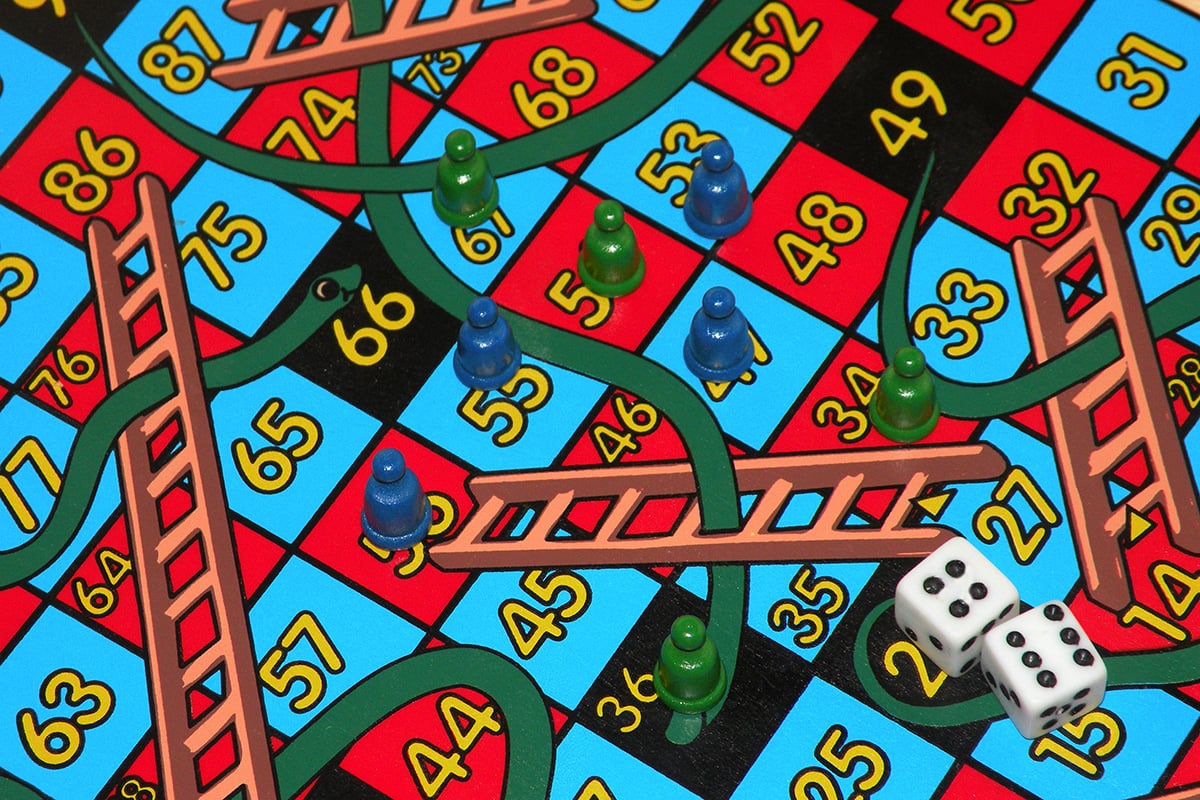
Snakes-and-ladders can be adapted for people living with dementia
Memory games for dementia
Memory games are regularly played at Ryman to help support cognitive function for people living with dementia. Here are a few to try:
Matching pairs
This game is simple, familiar, and easy to adapt. Using cards with familiar images, players take turns flipping two cards at a time to find a matching pair. The game encourages visual recognition, short-term memory recall, and can be played in small groups or one-on-one.
Finish the phrase
“An apple a day…” prompts the response, “keeps the doctor away.” Finish the phrase games can use well-known sayings, song lyrics, or proverbs to spark long-term memory and conversation. Say the first part of the phrase, and the person living with dementia says the second part. Choose phrases that are familiar to the person playing the game, such as lyrics from their favourite song.
Object and name recall
This game is all about reinforcing familiarity. A selection of everyday objects (such as a teacup, glasses, spoon, and hairbrush) is placed on a tray and shown to the person with dementia. After a short time, the items are covered or removed, and the person is asked to name or describe them.
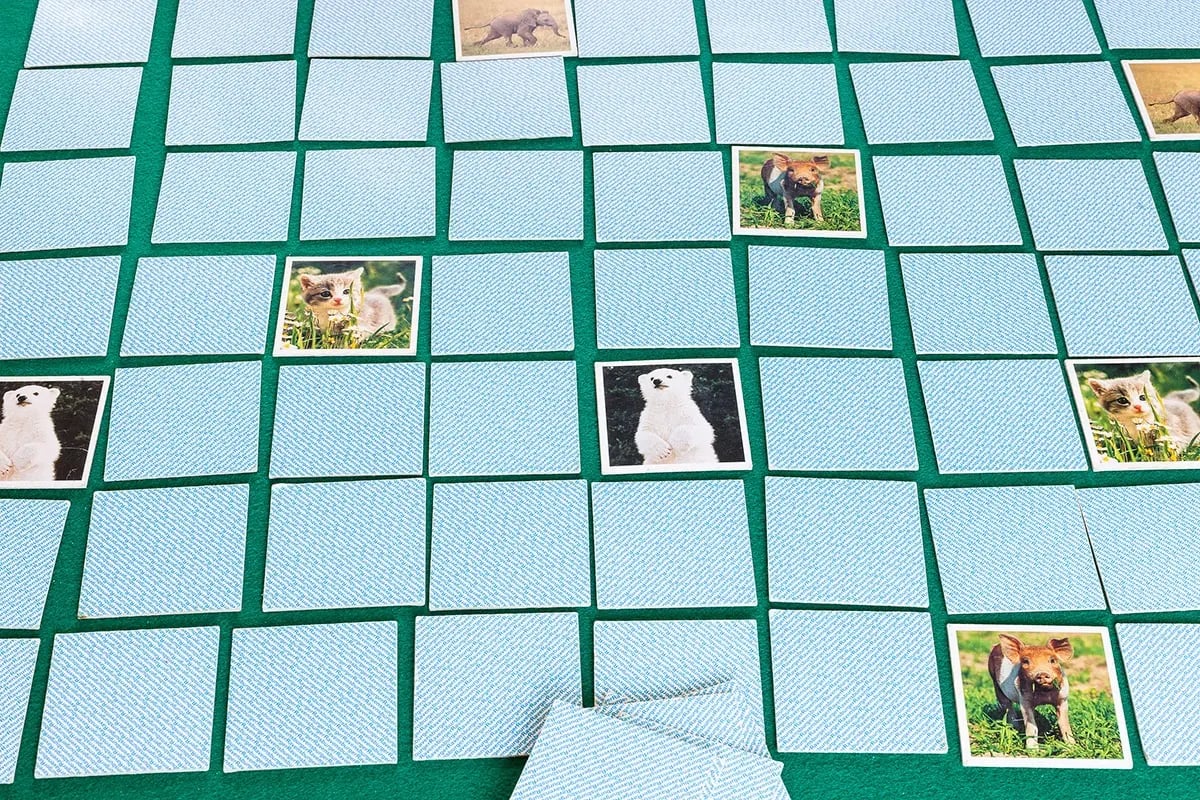
A matching pairs card game
Simple games for dementia patients
When it comes to supporting people living with dementia, simple activities are often comforting and engaging. At Ryman, games that involve tactile interaction and familiar materials are tailored to each resident’s abilities and stage of dementia. These games are easy to follow, gently stimulating, and always delivered with care.
Sorting objects
This activity involves grouping everyday items by colour, shape, size, or texture. Residents might sort coloured buttons, soft fabrics, or wooden blocks into matching containers. It’s a calming and repetitive task that encourages focus and provides a sense of accomplishment.
Stacking activities
Stacking cups, blocks, or rings helps support hand-eye coordination and motor skills. The simple, repetitive motion can be soothing, and people often enjoy the challenge of seeing how high they can build before the tower tumbles.
Flashcards
Using large, clear flashcards with images or words can prompt memory recall and spark conversation. Ask simple questions like, “What’s this?” or “Have you seen one of these before?” to encourage verbal responses.
Sensory exploration boxes
A sensory exploration box contains a variety of items that engage the senses: sight, touch, smell, sound, and even taste. Items are chosen based on the person’s past interests and preferences and should be safe and easy to handle. Some options include textured fabrics, familiar scents, and photographs that the person can explore at their own pace.
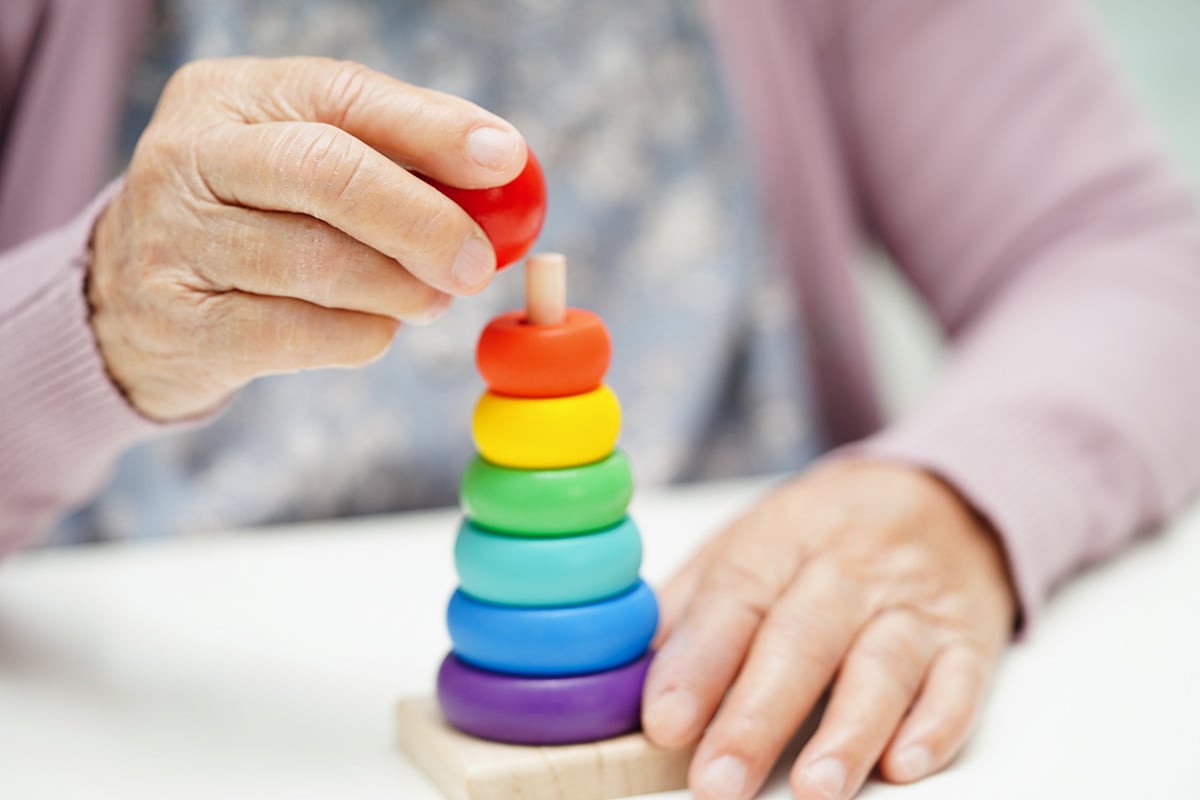
Stacking games can help support coordination and motor skills
Ryman’s role in supporting dementia
At Ryman, we believe people living with dementia deserve care that is safe, supportive, respectful, and meaningful.
Our dementia-friendly spaces are thoughtfully designed to promote independence and reduce confusion, with clear wayfinding and secure indoor and outdoor areas that encourage movement and connection. All team members receive specialised dementia training, ensuring they can support each resident with warmth and understanding.
Lifestyle and activity programmes such as the types of games shared in this article are an intrinsic part of life in our care centres as they help support cognitive function, emotional wellbeing, and social interaction.
We also walk alongside families and carers, offering information, reassurance, and ongoing support throughout the journey.
Learn more about Ryman’s bespoke model of dementia care or contact us on 0800 588 222 to discover how we support residents living with dementia across New Zealand.
by Christine McCurdy | Sep 18, 2025

Do people with dementia sleep a lot?
Changing the conversation around dementia