
%20(1)-min.jpg?width=1620&height=1080&name=IMG_3375%20(Large)%20(1)-min.jpg)
William Sanders Village residents are proving how much they care about the environment by learning more about waste and setting up enhanced recycling stations in the village.
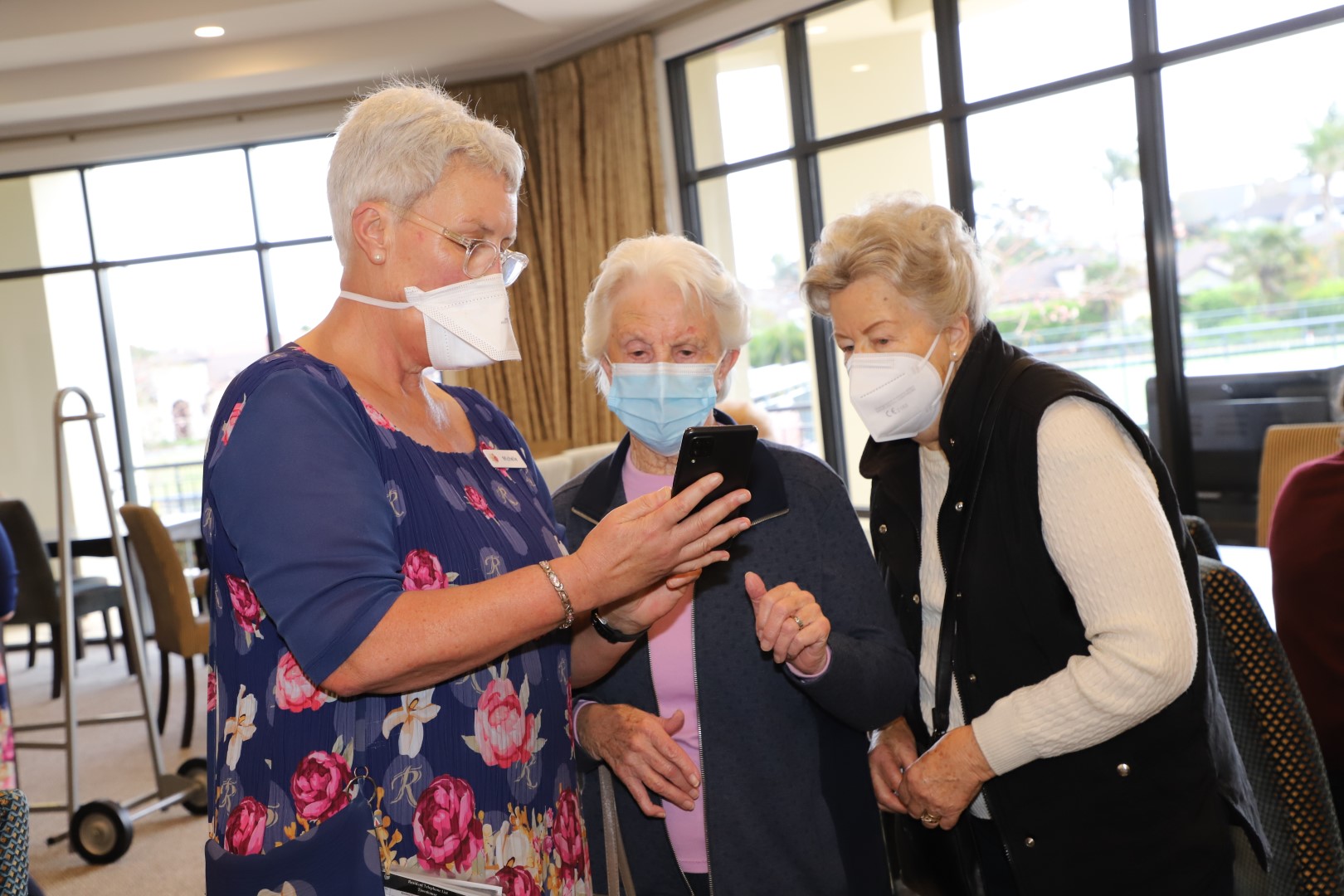
Dozens of residents recently attended a village presentation about the circular economy and reducing waste spearheaded by fellow resident and University of Auckland Professor Emeritus Ralph Cooney ONZM.
Ryman Healthcare Sustainability Manager Sadie Keenan and two representatives from Waste Management, who currently collect waste from the village, also contributed.
READ MORE:
Ralph explained that landfill waste can often end up forming floating islands of garbage in the ocean and suggested ways that people can avoid disposing of things that can be used again.
“Plastic drink bottles can be recycled up to 10 times but only 17% are recycled in New Zealand,” Ralph said.
“We should aim for 100%, perhaps by using a return and earn system like they have in New South Wales, Australia.”
Items that required considerable resource in their manufacturing were an important focus, such as aluminium or steel cans, or more complex items such as mobile phones, which often include 46 out of the 118 elements in the Periodic Table in their production.
He said companies like Apple were doing the right thing by using recycled cobalt and lithium to make the batteries in their newest model.
“We can add a bit of positive pressure to the system by asking the background of the recyclability of its components.”
He added: “We tend to think it’s someone else’s problem. Wrong! People like us have helped to create these ocean waste islands.”
%20(1)-min.jpg)
%20(1)-min.jpg)
-min.jpg)
Since joining Ryman at the beginning of the year, Sadie has worked out some interesting facts and figures about the amount of waste being produced in Ryman villages.
She calculated that William Sanders residents had produced less waste per resident than the Ryman average, with an estimated 5,540 cubic metres being recycled.
The next step, she said, was to set some reduction targets Ryman-wide.
“It’s a big challenge but it’s also a big opportunity if we all make some changes,” she said.
“You’re doing well, but you can do better!”
The team from Waste Management – Key Account Manager Iren Kohli and National Business Manager Sanchit Jain – shared insights into types of rubbish, where it goes and what they do with it.
“You guys are already doing a great job, but here’s what we can do to keep up the good work,” Iren said.
“Try to rinse out the containers, put the right things in the right bins and try and avoid using plastics which can cause big problems in our facilities.”
He said at Waste Management they try to avoid using the word landfill.
“For us, we call them energy parks. We make electricity out of the waste that we collect at a landfill from the gases that come out, such as methane. This is enough to power nearly 24,000 homes.”
Maxilyn Tudman, who set up a recycling committee in the village, believes William Sanders residents are below the Ryman average because of their recycling efforts.
Along with the usual wheelie bins for cans, plastic, glass, paper and cardboard, the nine-strong recycling committee has created a system where even more items can be diverted from landfill.
In the rubbish room of her apartment building beside the big wheelie bins, Maxilyn has organised a shelving system with buckets and boxes to collect items ranging from prescription spectacles, paper bags, milk and wine bottle tops, to glass jars, coffee pods, batteries, ice cream containers and newspapers.
-min.jpg?width=1620&height=1080&name=IMG_3384%20(Large)-min.jpg)
Maxilyn Tudman with some of the cartons of newspapers she collects for local pet rescue organisations.
Local op shops receive the paper bags, the spectacles go to the Fred Hollows Foundation, the wine bottle tops go to KidsCan to be resold for their aluminium content while the glass jars and ice cream containers go to Ugly’s, a community pantry that ensures neighbourhood fruit doesn’t go to waste.
“I collect the newspapers, probably about 25 wine cartons a week, and drop them off to three pet rescue organisations, Brave Paws, SPCA Kittens and Guinea Pig Rescue,” says Maxilyn, who dogsits French Bulldogs when their owners are away or at work.
“It’s amazing how quickly the boxes fill up.”
A former sales manager for Southern Cross, Maxilyn says the village maintenance and reception teams were great to have on board for sorting and labelling assistance.
“They sorted out the shelves for us which has been a help and we’ve sourced boxes and plastic buckets from the kitchen and bar to sort all the other items. We work with Phil, our maintenance chap, to help us keep the room tidy.”
“From my perspective, I cannot think of throwing anything away that could help others who can reuse it, and I just don’t like the thought of the waste of it going into landfill,” Maxilyn says.
%20(1)-min.jpg?width=1432&height=924&name=IMG_3385%20(Large)%20(1)-min.jpg)
Jo Cliffe in the rubbish room of her apartment building.
Recycling committee chair, Jo Cliffe, says the rubbish room is a very sociable place.
“New people like to talk and regulars catch up.
“I think we like to try to think of something we can establish but only if it can be seen to have a future in recycling.”
Jo says the constant challenge is making sure the right things go in the right boxes and educating others on what can and can’t be recycled.
“My thought is that we target a monthly item, for instance July could be yoghurt pots and lids, and we perhaps use our Ryman app to reach out to our residents online.”
by Maryvonne Gray | Jul 7, 2025
Friendship goals realised for Keith Park Village’s ‘Golden Girls’
Be inspired by our incredible Ryman residents!